
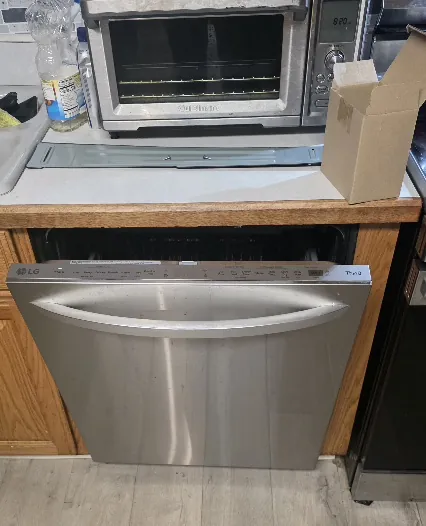
A leaking dishwasher can be easy to dismiss at first. A few drops on the floor may look like a spill, rinse water from an open door, or a one-time mess. But when water returns during a cycle, it can travel under cabinets, reach flooring, and leave you unsure whether it is safe to use the appliance again. The most useful first step is not to guess at a part. It is to stop the cycle, make the area safe, and notice where and when the water appeared.
This guide is for careful observation, not taking a built-in dishwasher apart. The exact parts and access points vary by model, and the appliance is connected to power, water, and a drain inside a tight cabinet opening. If the source is not obvious after a simple owner-accessible check, People 1st Home Services provides dishwasher repair for homeowners across Walton County and nearby communities.
Stop the dishwasher if it is actively leaking. Do not stand in water to unplug it or reach into the cabinet opening. From a dry position, turn it off at the controls. If you can safely access the water shutoff under the sink, close it. Use towels to contain reachable water, keep children and pets away, and arrange help right away for water near an outlet, a damaged cord, a burning smell, or a breaker that has tripped.
First, notice where the water is appearing
The location gives you a better starting point than the size of the puddle. Water along the front edge or below the door can involve the door seal, an item blocking the door, excess suds, or spray being deflected toward the front. Water under the appliance can come from a supply or drain connection, but it can also travel along the frame before reaching the floor. Water from the air gap or under-sink area may point to the drain path or household plumbing instead of the dishwasher tub.
Also note the timing. A leak while the dishwasher fills tells a different story from a leak during the wash portion or at the end when it drains. GE Appliances separates its dishwasher leak guidance by location because door, drain, plumbing, and suds problems can look similar from the kitchen floor. A quick photo and a note such as “it started ten minutes into the cycle” can be more helpful than trying several fixes at once.
1. Check for a spill before you blame the dishwasher
Dry the floor and look for simple sources first. A cup tipped while unloading, water running down the door after it was opened, or a wet dish rack can leave a puddle that looks more alarming than it is. If the area stays dry after cleanup and no water returns during a later cycle, the dishwasher may not be the source.
If water returns from the same place during a cycle, treat it as an active leak. Avoid repeatedly opening and closing the door to watch for it. That can release water, interrupt the normal cycle, and make the original timing harder to understand. Instead, stop the appliance, dry the reachable water, and record whether it appeared at the front, below the cabinet, near the sink connection, or somewhere else.
2. Look at the door opening without taking anything apart
For a front leak, start with what you can see when the dishwasher is off. Look for a utensil, dish, or rack that prevents the door from closing fully. Then inspect the accessible surface of the door gasket for food residue, grease, a visible tear, or a section that has slipped out of place. Bosch notes that buildup on the gasket or a damaged spray arm can direct water toward the door seal, which is why the visible door area is a sensible first check.
Use a soft damp cloth only if the owner’s manual allows cleaning the gasket. Do not use a knife, screwdriver, or harsh cleaner around the seal. Do not pull a built-in dishwasher forward to reach behind it. A seal that is visibly torn, a door that will not latch normally, or a leak that keeps returning after a gentle surface clean is a repair concern rather than a cleaning project.
3. Rule out excess suds and rinse-aid spills
Dishwashers need detergent made for automatic dishwashers. Hand dish soap, extra detergent, or a spilled rinse aid can create excessive suds. Those suds can push water out of the tub and make a leak or overflow look much worse. GE specifically identifies wrong detergent, too much detergent, and spilled rinse aid as causes of suds-related leakage in its under-dishwasher leak guidance.
If the problem began after switching products, using more detergent than usual, or accidentally adding dish soap, stop the cycle. Wipe up any reachable rinse-aid spill and use the manufacturer’s instructions for your model before trying a rinse or drain step. Do not add household cleaners, drain chemicals, vinegar, or more detergent in an attempt to counteract the suds. That can create a second problem without telling you why the first one happened.
4. Check the visible space under the sink
With the dishwasher off, look under the sink for moisture around the accessible water supply and drain connections. You are only looking for an obvious drip, a kinked drain hose, a loose-looking connection, or water coming from an air gap. Do not disconnect a hose, force a fitting, or use tools on plumbing you cannot clearly identify.
Water that comes from an air gap, a small fitting near many kitchen faucets, or from a slow sink drain can indicate a plumbing concern. GE notes that water leaking from an air gap or a dishwasher that will not drain without suds may point to the home’s plumbing. If the sink backs up too, a plumbing professional may be the better fit. If the under-sink connections look dry but water keeps coming from under the dishwasher cabinet, stop there and arrange appliance service.

5. Think about loading and the spray arm
A large item can prevent the door from closing, hold the lower rack out of place, or block a spray arm. With the dishwasher off, make sure the racks move normally and that no pan, utensil, or tall item is pressing against the door. If your owner’s manual shows how to check the lower spray arm, confirm it can turn freely and does not have visible damage.
Do not pull racks, spray arms, or filters apart beyond the steps the manual gives for your exact model. A damaged spray arm can direct water toward the door, but it is not the only reason a dishwasher leaks. If the arm looks cracked, the rack is bent, or the appliance leaks only during the wash action, describing those observations gives a technician a useful place to begin.
6. Do not ignore water from underneath the appliance
Water under a dishwasher is harder to trace from the outside because it can run along a hose or the appliance frame before it reaches the floor. The source might be a connection behind the unit, a drain component, an internal seal, or another part that cannot be checked safely from the front. GE recommends service for water coming from under a dishwasher when it is not explained by a plumbing concern.
Do not remove the kick plate, cabinet panels, or dishwasher panels to investigate. Do not slide the appliance out by pulling on the door or hoses. Built-in dishwashers are secured, connected, and often heavy enough that a small movement can damage a water line or power connection. The safe, useful information is when the leak happens, where it first appears, whether the water is clear or soapy, and whether the dishwasher completes the cycle.
When a leaking dishwasher needs repair
Cleaning an accessible door surface, correcting an overloaded rack, or using the right detergent can address a simple cause. They cannot diagnose an internal leak, a failing pump, a damaged supply line, hidden drain connection, latch problem, or an appliance that is no longer level. A dishwasher that leaks more than once deserves a clear diagnosis before it damages flooring or cabinets.
Arrange service when the water returns after a simple safe check, the gasket is visibly damaged, the leak is coming from underneath the dishwasher, an error code repeats, the appliance makes a new sharp sound, or there is any electrical concern. People 1st can help with dishwasher repair. You can review the communities we serve and choose an appointment time that works for your household.
What to tell a technician before the visit
Have the dishwasher brand and model number ready if it is easy to find. Then describe the pattern: “water appears below the door during wash,” “the air gap overflows during drain,” or “there is a puddle under the cabinet after the cycle” is more useful than “it leaks.” Mention any recent detergent change, disposal installation, sink-drain issue, or error message.
You do not need to identify the part or take the dishwasher out of its opening. The goal is to give the service visit a reliable starting point while keeping the kitchen safe. If water is remaining inside rather than reaching the floor, the related dishwasher drainage guide can help you distinguish a drain concern from a leak.
A quick checklist before you restart
- Stop the dishwasher for active leaking, water near power, a burning smell, a damaged cord, or a tripped breaker.
- Dry the area and note where the water first appeared and what part of the cycle was running.
- Check for a simple spill, an item blocking the door, or visible buildup on the accessible gasket surface.
- Use only automatic-dishwasher detergent and address any accidental dish-soap or rinse-aid spill using the owner’s manual.
- Look under the sink for visible moisture, a kinked hose, or an air-gap or sink-drain issue, without disconnecting anything.
- Arrange repair when the leak returns, comes from underneath the appliance, or cannot be safely explained.
Need help with a leaking dishwasher?
Tell us where the water is appearing and when it starts. We will help you choose a convenient time for a repair visit.
Frequently asked questions
Why is my dishwasher leaking from the bottom of the door?+
Water at the front can come from a door gasket that is dirty or damaged, an item preventing the door from closing, excess suds, a spray arm problem that directs water toward the door, or an appliance that is not level. Turn the dishwasher off, dry the area, and use the owner's manual for any simple owner-accessible check. If the leak returns, arrange service rather than continuing to run cycles.
Can I run my dishwasher if it is leaking a little?+
It is better to stop using a dishwasher that is actively leaking. A small puddle can spread under cabinets or reach electrical connections, and a later part of the cycle can release more water. Dry the reachable area, keep people and pets away, and close the water supply only if you can do so safely. Restart only when the cause is clearly resolved according to the appliance manual.
Can too much detergent make a dishwasher leak?+
Yes. Hand dish soap, too much automatic-dishwasher detergent, or spilled rinse aid can create excess suds. Suds can push water out of the tub and make a leak look worse. Stop the cycle and follow the manufacturer's guidance for your model instead of adding more cleaners or running repeated wash cycles.
When should I call for dishwasher repair?+
Arrange repair when water is coming from under the appliance, the door gasket is visibly damaged, the dishwasher leaks again after a simple owner-accessible check, an error returns, the appliance makes a new sharp sound, there is water near power, or you smell burning. A technician can diagnose hidden connections, pumps, seals, and installation issues without asking you to pull the dishwasher out of its cabinet opening.