When a refrigerator is not cooling, the first instinct is often to turn the temperature setting colder and hope it catches up. Sometimes that is all it takes. Often, though, the more useful question is what changed: Is the whole appliance warm? Is the freezer still cold? Did the door fail to close, did the refrigerator just get loaded with groceries, or is there a new sound or error message?
The goal is not to take the refrigerator apart or guess at a part. It is to make a few safe checks, protect food while the temperature is in question, and recognize the point where a professional diagnosis is worth more than another reset. People 1st Home Services provides refrigerator repair for homeowners across Walton County and nearby communities.
The U.S. Food and Drug Administration recommends keeping a refrigerator at or below 40°F and a freezer at 0°F. If the refrigerator has been warm for an unknown amount of time, avoid guessing whether perishable food is still safe. Keep the doors closed as much as possible and use the FDA's food-storage guidance when you need help deciding what to keep or discard.
First, tell the difference between a warm refrigerator and a temporary recovery period
A refrigerator can need time to recover after a long power interruption, a large grocery load, a door left open, or a temperature adjustment. That is different from an appliance that has been running for hours and still cannot keep milk, leftovers, or produce cold. If you have a thermometer, check the temperature rather than relying only on how cool the air feels. The inside should be 40°F or below for refrigerated food.
Also pay attention to the freezer. If both sections are warm, the issue may involve power, cooling, or the sealed system. If the freezer is cold but the refrigerator section is warm, the problem can be more specific to airflow, settings, a blocked vent, or a component that moves cold air where it is needed. That difference gives a technician a much better starting point when you make an appointment.
Give one change time to work before changing something else
It is reasonable to expect a refrigerator to work harder after you put away a large grocery order, load several room-temperature dishes, or leave the door open while cleaning. Those events add warmth and moisture that the appliance has to remove. A refrigerator that is recovering may run longer than usual, and that alone does not prove it needs repair.
What makes the situation clearer is a simple, controlled check. Close the doors, leave the controls at one model-appropriate setting, and avoid adding more warm food while you watch the temperature. If the appliance begins returning to a safe temperature, the earlier event may have been the main cause. If it keeps running but the refrigerator stays above 40°F, the freezer begins softening, or the temperature continues climbing, that is no longer a wait-and-see situation.
Do not pile on several changes at once. Turning the controls to the coldest setting, unplugging the appliance, moving every shelf, and repeatedly opening the door can make it harder to tell what happened. One careful observation gives you useful information. Five experiments usually give you a warm refrigerator and no clearer answer.
1. Check power, the display, and the temperature setting
Start with the obvious signs that the refrigerator has power. Is an interior light on? Is the display active? Can you hear the usual fan or compressor sounds? A light does not prove every cooling component is working, but it helps separate a full power loss from a refrigerator that is powered but not cooling correctly.
Check the control setting next. A child lock, vacation mode, demo mode, recently changed setting, or a simple accidental bump can make a refrigerator behave differently. Use the owner's manual for the exact display symbols and setting range for your model. Do not keep moving the temperature lower every few minutes. Give the appliance time to respond after one sensible adjustment, and write down what the display shows.
If the refrigerator is completely unresponsive, the outlet is not working, a breaker has tripped, or a breaker trips again after one safe reset, stop there. Do not use an extension cord or keep resetting power. That calls for an electrician or appliance technician, depending on the issue.
2. Make sure the doors are actually sealing
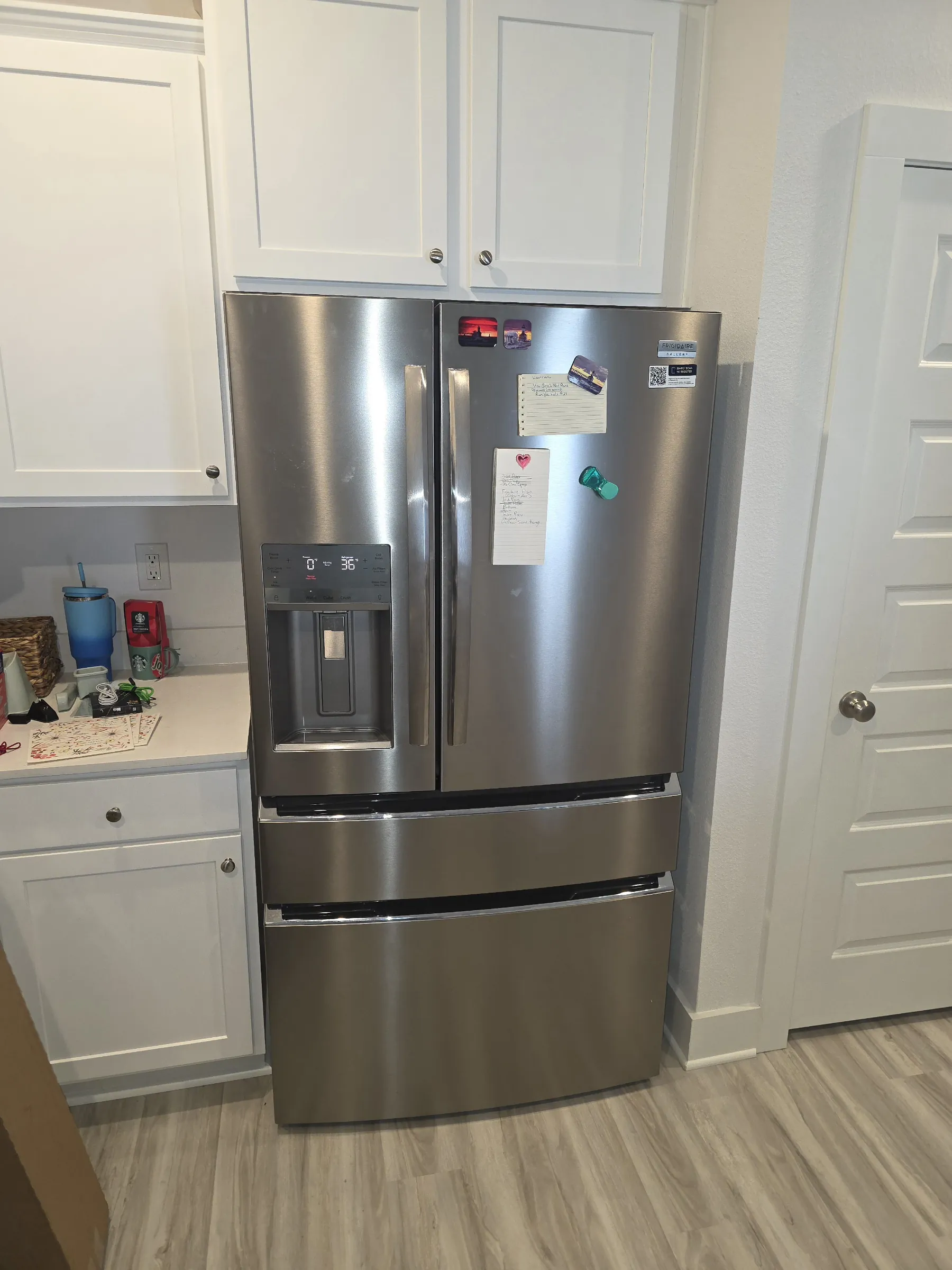
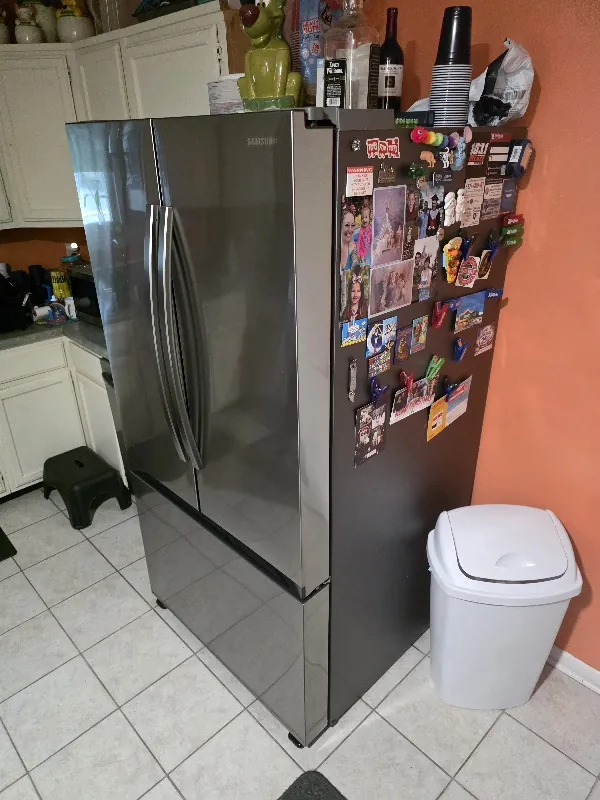
A refrigerator cannot hold its temperature well when warm room air keeps getting in. Check for a container, bag, shelf, or bulky item that is stopping a door from closing. On French-door models, look at the center flap and make sure it is folding into place as the door closes. On a bottom-freezer model, make sure a package is not holding the drawer slightly open.
Look over the visible door gasket for food residue, a twisted section, or obvious damage. A soft cloth and the cleaning method approved in your manual can remove residue that prevents a clean seal. Avoid pulling hard on the gasket, using sharp tools, or trying to reshape it with heat. A gasket that is torn, loose, or no longer sealing evenly is a repair issue, not a reason to improvise.
After you close the doors, give the refrigerator space to work. Opening the door repeatedly to check whether it feels colder releases more cold air and makes the recovery time harder to judge.
3. Leave room for interior airflow
Cold air has to move through the refrigerator and freezer compartments. A packed shelf can block vents, especially when food is pressed against the back wall or stacked directly in front of an air outlet. This is common after a large grocery run, when containers get pushed wherever there is room.
With the appliance running, look for visible vents inside each compartment and leave open space around them. Move a container or bag that is clearly blocking a vent, but do not remove interior panels or stick anything into an opening. The vent layout differs by model, and forcing a cover or duct can cause more damage.
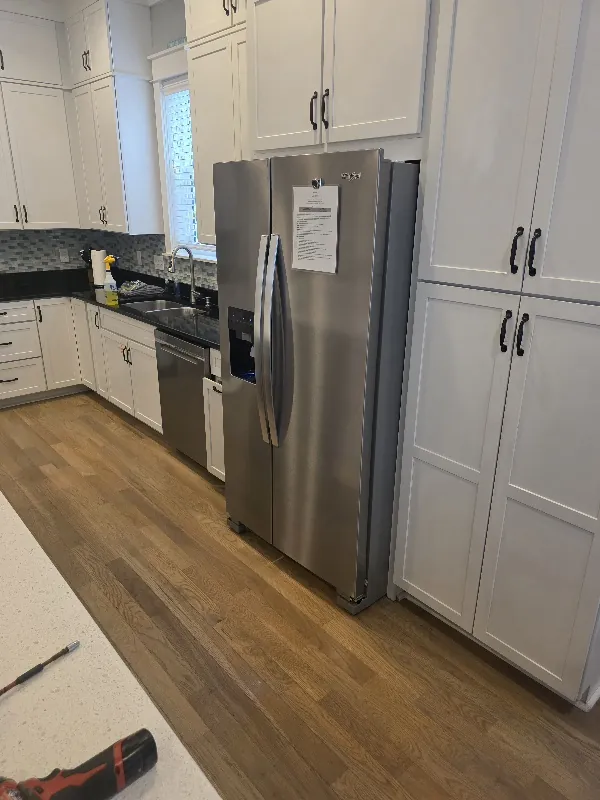
If the freezer is cold but the fresh-food section is warm, cleared vents and a fully closed door are the useful owner checks. If the section remains warm after that, the refrigerator may need diagnosis for a fan, damper, sensor, defrost issue, or another internal component. The appliance's service history and exact symptoms are more useful than trying to identify a part by sound alone.
4. Look for heat, dust, and space around the appliance
Refrigerators release heat as part of normal operation, so some warmth around the outside or near the lower back can be expected. What matters is a clear change: a refrigerator that is far hotter than usual, runs constantly without cooling, smells burnt, or has new clicking or buzzing sounds needs attention.
Check the space around the appliance without pulling it out by the power cord or water line. A refrigerator crammed tightly against the wall or surrounded by stored boxes may not have the airflow its installation instructions require. Dust and pet hair can also collect around owner-accessible vents, grills, or condenser areas on some models. GE's refrigerator support guidance is a useful reminder that the correct care steps depend on the model.
Follow your manual before cleaning any grille or condenser area. Do not remove a panel, disturb tubing, or reach around exposed wiring. If the manual does not clearly identify the task as owner care, leave it for a technician.
5. Pay attention to the freezer, ice maker, and water under the refrigerator
A refrigerator problem rarely announces itself in only one way. Ice cream that is softer than usual, a freezer that is no longer holding a frozen package solid, water collecting under a crisper drawer, frost that keeps returning, or an ice maker that suddenly stops can all help describe the larger issue.
Water has more than one possible source. A spill, a blocked defrost drain, an ice maker issue, or a water-line connection can each leave water in a different place. Do not tip the appliance, disconnect a water line, or remove a back cover to investigate. Dry up water that is safely reachable, keep it away from electrical connections, and note exactly where it appeared.
These details are useful when you book. “The refrigerator section is 50°F but the freezer is cold,” “the door will not seal,” or “water is collecting under the drawers” is much clearer than “the fridge is acting up.” Clear symptoms help People 1st Home Services arrive ready to start in the right place.
What not to do when the refrigerator is warm
A cooling problem can tempt people to make a fast fix. Resist that impulse. Do not scrape ice with a knife, chip at panels, pierce tubing, pull a refrigerator out by the cord or water line, or use a hair dryer inside the appliance. Do not keep changing controls, unplugging the refrigerator, and plugging it back in without a model-specific reason.
It is also best not to treat a warm refrigerator as a storage cooler while you wait. Keep the doors shut, move perishable food to a working refrigerator or cooler with ice when appropriate, and check the FDA's storage advice rather than relying on smell or appearance alone. Food safety is not the place for a hunch.
When a simple check becomes a repair call
Safe checks are useful because they can catch a blocked vent, a door that was not sealing, or a control setting that changed. They cannot diagnose the sealed cooling system, compressor, fan motors, control board, sensors, defrost components, or a water-line issue. A refrigerator that stays warm after the basics needs more than patience.
Arrange service when the refrigerator will not get below 40°F, the freezer is not holding food frozen, the appliance runs constantly, the compressor area is unusually hot, a burning smell appears, water is collecting where it should not, a breaker trips, or an error keeps returning. For local homeowners, People 1st Home Services can help with refrigerator repair. You can also review the communities we serve before scheduling.
Make a refrigerator repair visit more useful from the start
Before you call, take a quick note of the brand and model number if it is easy to reach. Record the temperature in the refrigerator and freezer if you have a thermometer, whether the interior light and display work, any sound or error code, and where you found water or frost. Mention whether the refrigerator was recently moved, lost power, or was heavily loaded before the issue began.
Leave a clear path to the appliance when it is safe to do so. Avoid pulling it away from the wall yourself if it is heavy, connected to a water line, or sitting on a delicate floor. The goal is to make diagnosis safer and quicker, not to turn a cooling problem into a damaged line or floor.
A quick recap before you call
- Keep the refrigerator and freezer doors closed, and protect perishable food first.
- Confirm the refrigerator has power and check the display and temperature setting once.
- Make sure no food or container is blocking the doors or interior air vents.
- Look for visible gasket residue, water, frost, unusual heat, or new sounds.
- Follow only the owner-care steps that your model manual allows.
- Book repair when the refrigerator remains warm, the freezer is not freezing, or a warning sign appears.
Refrigerator not staying cold?
Tell us what changed, and choose a convenient time for a repair visit.
Frequently asked questions
What should I do first if my refrigerator is not cooling?+
Start by protecting food and checking the basics. Keep the doors closed as much as possible, confirm the refrigerator has power, check the temperature setting, and look for an obvious door-seal or airflow problem. If the refrigerator is warm, making unusual noises, showing an error, or the food-safety concern is growing, arrange repair rather than repeatedly changing settings.
Can a dirty condenser area make a refrigerator stop cooling?+
Dust and lint around the condenser area can reduce a refrigerator's ability to release heat, but the safe cleaning method varies by model. Only clean areas your owner's manual identifies as owner-accessible. Do not remove panels, disturb wiring, or use a vacuum where the appliance instructions do not allow it.
Why is my freezer cold but my refrigerator section is warm?+
When the freezer is cold but the refrigerator section is warm, the issue can involve airflow between compartments, a blocked vent, a door left ajar, settings, or a part that needs diagnosis. Avoid blocking interior vents with food, confirm the doors close fully, and use your model's manual before attempting any reset or cleaning step.
When should I call for refrigerator repair?+
Call for refrigerator repair when the refrigerator stays warm after the safe checks, food is not staying safely cold, the compressor area is unusually hot, the unit has a burning smell, water is collecting where it should not, a breaker trips, an error returns, or the appliance is making new clicking, buzzing, or grinding sounds.