When a washing machine does not spin, the first sign is usually impossible to miss: clothes are still heavy with water, the cycle seems to stall, or the drum never picks up speed. It is frustrating, especially when laundry is already partway done. The useful question is not “what part is broken?” but “what is the washer telling me before I make the problem worse?”
Some spin problems come down to a load that is too heavy on one side, a cycle chosen for delicate items, or a hose that is not letting water leave the tub. Others involve parts that should be diagnosed by a trained technician. This guide starts with the checks that do not require opening a panel, moving wiring, or guessing at repairs.
Start with the clues you can see
Take a minute to notice what happened near the end of the cycle. Are the clothes dripping wet but the tub is empty? Is there standing water in the drum? Did the washer bang or walk across the floor before it stopped? Did a lid lock, door lock, or error message appear? These details narrow the possibilities much faster than restarting the same cycle over and over.
Manufacturer guidance from Whirlpool and Maytag points to many of the same first signs: soaking-wet clothes, excess vibration, an unbalanced load, low-spin settings, a door or lid that is not fully closed, and drainage trouble. That overlap matters because it keeps the first checks simple and practical.
If the washer is leaking, smells hot or burnt, trips a breaker, makes sharp grinding sounds, or has water around the plug, stop using it. Do not reach behind or under a connected appliance. Turn it off, keep the area clear, and arrange service.
1. Pause and rebalance the load
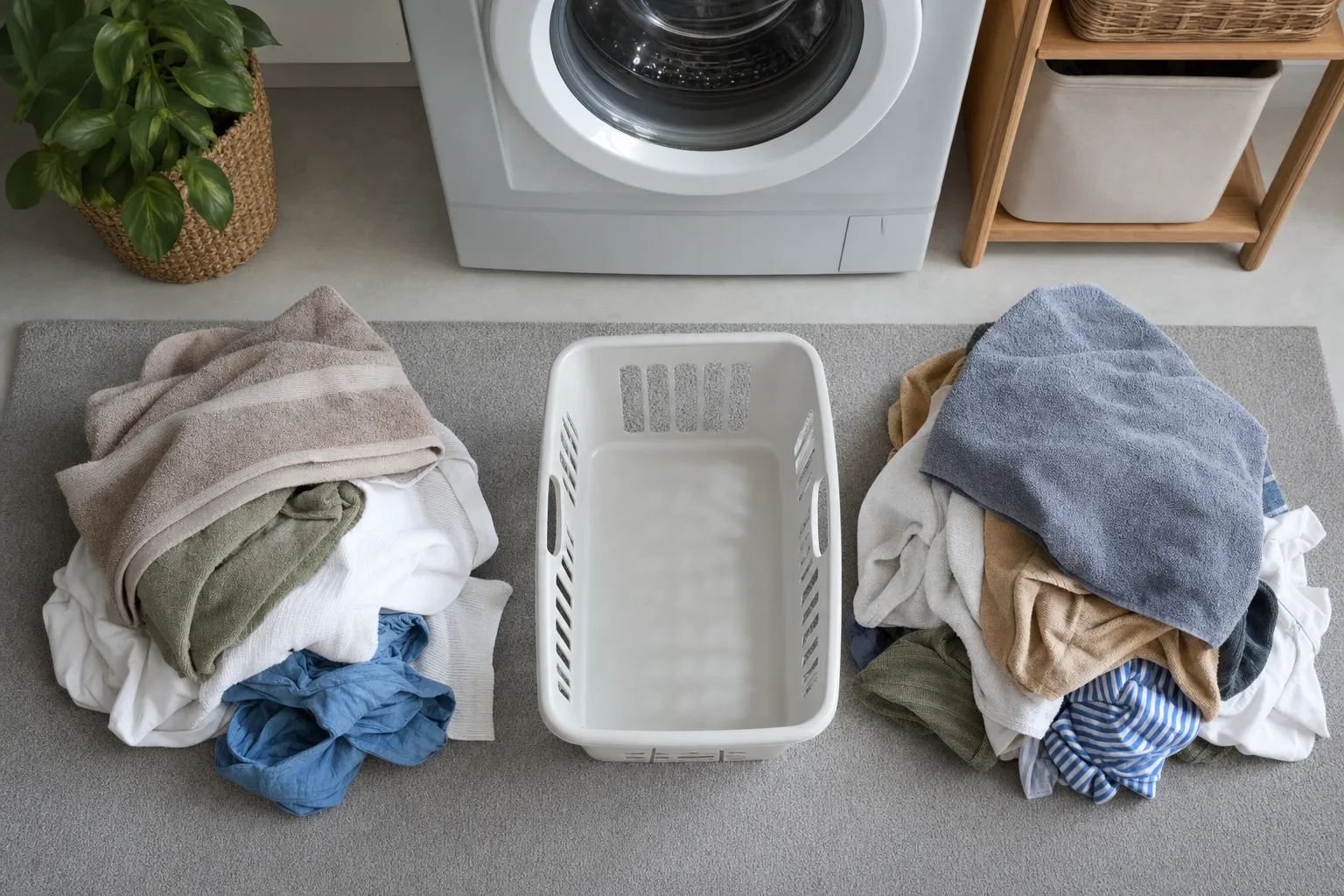
Large towels, bath mats, jeans, sheets, and a single heavy item can clump together during a cycle. When too much weight ends up on one side, many washers slow or stop the spin to avoid excessive vibration. An overfilled drum can cause the same problem because the clothes do not have room to redistribute.
Pause the machine if it allows you to do so safely. Open the door or lid only after it unlocks, then spread the laundry around the drum. Remove a few pieces if the load is packed tightly. A bulky item often benefits from being washed with a few smaller compatible items, rather than alone. Follow your model's capacity guidance and care-label instructions, especially for blankets and comforters.
Then choose a drain-and-spin or spin cycle if your washer offers one. If the washer completes the cycle normally after rebalancing, the machine may be fine. If it repeatedly stops with ordinary mixed loads, take note of that pattern for a technician.
2. Check the selected cycle and spin setting
Not every cycle is designed to leave laundry equally dry. Delicate, hand-wash, and some low-speed settings intentionally spin more gently. That can be the right choice for certain fabrics, but it also leaves more water in the load. If the washer is otherwise quiet and drains completely, the settings may be the reason the clothes feel wetter than expected.
Look at the cycle you selected and compare it with the clothing labels. For a normal everyday load, use the manufacturer-recommended setting and avoid changing several options at once. A clean test is more useful: run one appropriately sized load, then see whether a normal spin finishes. If your washer has an error code, use the owner’s manual for your exact model before trying to reset it.
3. Make sure the washer is stable
A washer needs a firm, level footing to spin smoothly. When one foot is not supported or the floor flexes, the cabinet can shake enough to trigger an out-of-balance response. You may hear repeated thumping, see the washer shifting position, or find that it stops before the final spin.
With the washer turned off, press gently on the top corners. It should not rock. A simple level can help confirm whether the appliance is sitting evenly from side to side and front to back. Do not tip or pull a heavy washer away from the wall by yourself. If it needs more than a small adjustment, or if the floor feels unstable, get help moving it safely.
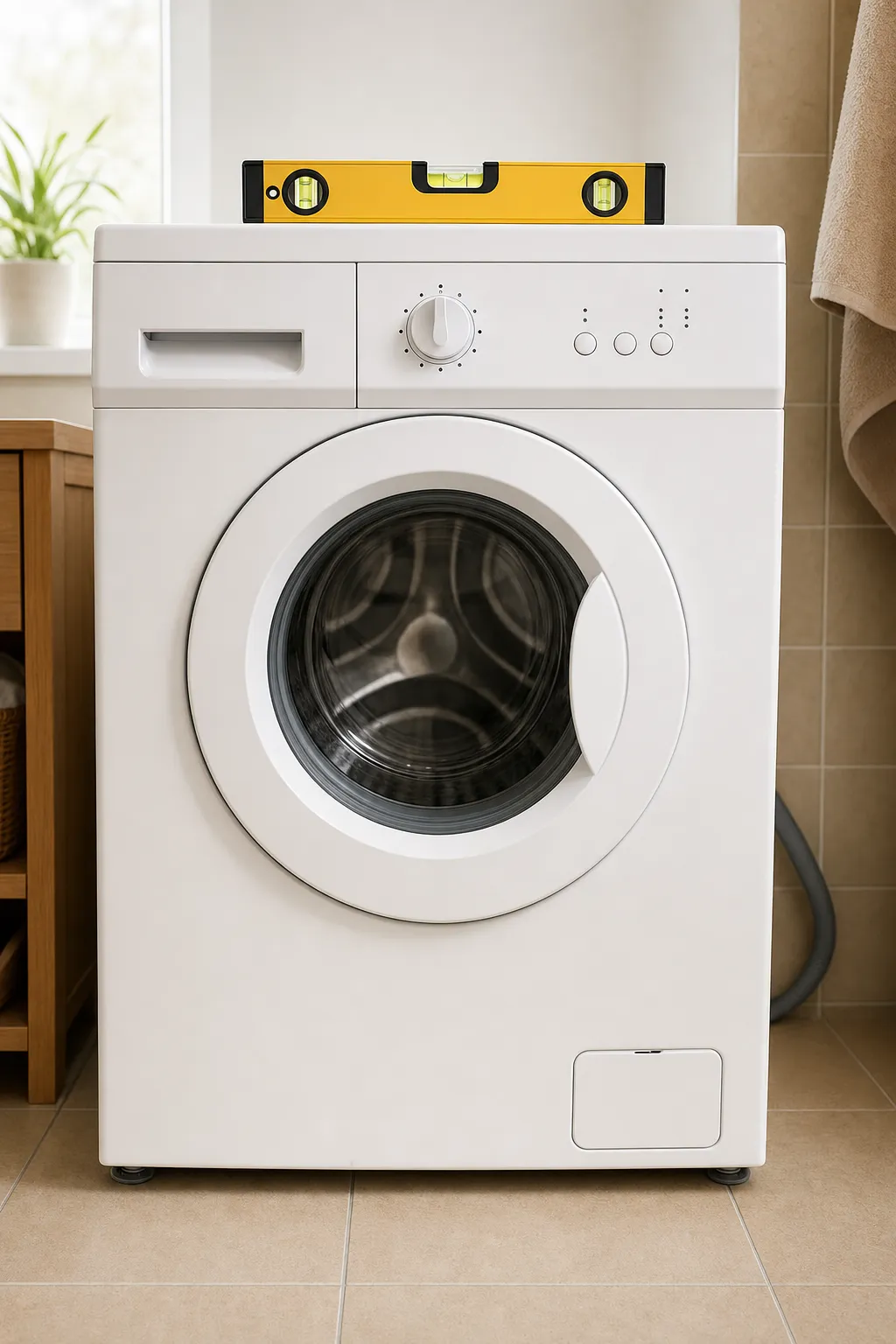
If the washer has been moving during spin cycles for a while, it is worth mentioning that when you make an appointment. The vibration history can help distinguish an installation issue from a developing mechanical problem.
4. Look for drainage warning signs
Most washers need to drain before they will spin at full speed. Standing water in the tub, a gurgling sound that never clears, or clothes that are wet enough to drip may point to a drainage issue. A kinked hose, a blocked filter on models that use one, or a pump-related problem can keep the washer from reaching the part of the cycle where it spins properly.
Without disconnecting plumbing or opening the machine, check the visible portion of the drain hose for a sharp bend, crushing, or an obvious pinch behind the washer. The hose should not be trapped against the wall. If your model has a user-serviceable filter, use its official instructions rather than an online video for a different model. Samsung’s washer support guidance also treats drainage and imbalanced loads as common reasons a washer may not complete a spin.
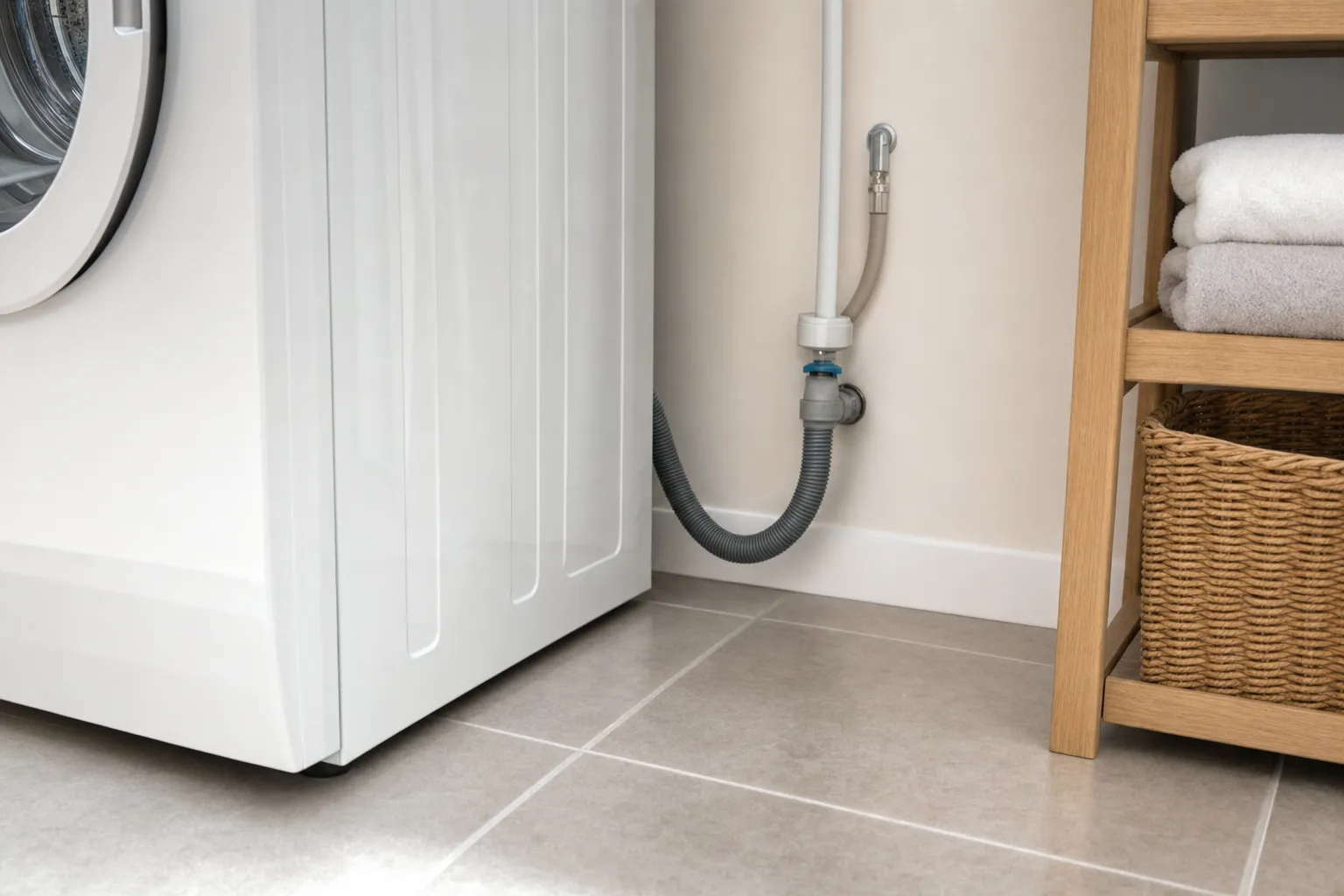
Do not force a hose, remove panels, or run repeated cycles if water is backing up or leaking. Water and electrical appliances are not a good place for trial and error.
5. Watch for excess suds
Too much detergent can make a washer behave in ways that look like a spin problem. The machine may take longer to drain, stop before the final spin, or leave clothes wetter than expected because the extra suds interfere with how the cycle senses and moves water. This is especially easy to miss with high-efficiency machines, which use less water and usually need high-efficiency detergent in a measured amount.
If you can see an unusual amount of foam through the door, or the issue began after changing detergent, pause before adding more product or starting a new full cycle. Check the detergent label and your owner's manual for the appropriate type and amount. Both Whirlpool's washer guidance and Maytag's troubleshooting guide list excess suds among the reasons a washer may not spin or drain as expected.
Do not try to “fix” suds by pouring in random household products. Use the manufacturer's directions for your specific washer. Once the machine is operating normally again, measuring detergent instead of pouring by eye is a small habit that can prevent the same headache later.
6. Confirm the door or lid closes properly
Modern washers use a door or lid lock as a safety step before high-speed spinning. A towel caught in the opening, a lid that is not fully down, or a door that does not latch cleanly can keep the cycle from advancing. Check the opening for fabric or debris, close it firmly, and try one cycle again.
If the latch will not engage, the display keeps reporting a lock issue, or the washer starts and stops without spinning, it is time to stop guessing. The lock, wiring, controls, belt, motor, and drain components are not a one-size-fits-all DIY repair. The model number and the exact behavior are more useful than a general description when you call for help.
What not to do when the washer will not spin
A washer can make a simple laundry problem feel urgent, particularly when there is a tub full of water. That is when it helps to set a few boundaries. Do not reach into a moving drum. Do not bypass a door or lid lock. Do not pull a heavy appliance away from the wall by its cords or hoses. And do not remove panels while the washer is connected to power.
It is also worth resisting the reset loop. One carefully chosen test, such as a rebalanced load or a drain-and-spin cycle, can tell you something. Repeating full cycles while the washer is shaking, leaking, or failing in the same way usually does not. It can soak more laundry, add more water to a drainage issue, and make it harder to tell what changed.
If there is water in the drum and the machine is not responding, start with your owner's manual. It may have a model-specific drain procedure, an explanation for the error code, or a recommended service path. If the washer is leaking or there is any electrical concern, turn it off and arrange help rather than trying to reach a hidden plug or hose in a wet area.
When a simple check becomes a repair call
A short list of safe checks can save a service call for a load that was simply unbalanced. But a washer that will not spin after those checks is not asking for endless resets. It is asking for diagnosis. Arrange service when the drum does not move, the washer repeatedly fails to drain, it leaks, it makes grinding or burning smells, it trips power, or an error code returns after you follow the model-specific manual.
For homeowners in Walton County and nearby communities, People 1st Home Services can help with washer and dryer repair. When you book, include the brand and model if you have it, whether there is water left in the tub, any error code, and what you noticed during the last cycle. That gives the visit a clearer starting point. You can also see the communities we serve before you schedule.
Make a repair visit more useful from the start
A short note before you book can make the conversation much clearer. Start with the appliance type and its approximate age if you know it. Add the brand and model number from the label, plus the exact problem: “drains but does not spin,” “stops with water in the tub,” or “spins only with very small loads” is far more useful than “washer is broken.”
Include the sequence of events. For example: the washer filled normally, washed for a few minutes, became loud during spin, then stopped with towels still wet. Mention any visible error code and whether the issue happens on every cycle or only with bulky laundry. Those details do not replace diagnosis, but they help the technician start in the right place.
Before the appointment, make the space around the washer accessible when it is safe to do so. Remove loose laundry, keep children and pets clear of the appliance, and avoid running another test if the machine has been leaking or overheating. A clear work area and a specific symptom are practical ways to save time without attempting a repair yourself.
A quick recap before you restart
- Stop using the washer if there is leaking, burning smell, a tripped breaker, or unsafe noise.
- Rebalance or reduce the load, then try one appropriate spin or drain-and-spin cycle.
- Check that the selected cycle is not intentionally low-spin.
- Confirm the washer is stable and the visible drain hose is not sharply kinked or crushed.
- Make sure the door or lid closes fully, then use the owner’s manual for any exact error code.
- Book repair if the same problem returns or the washer shows a more serious warning sign.
Need help with a washer that will not spin?
Tell us what the washer is doing and choose a time that works for you.
Frequently asked questions
Why is my washing machine not spinning but it still fills with water?+
A washer can fill and agitate but stop before spin because the load is unbalanced, the lid or door is not registering as closed, the selected cycle uses a low spin speed, or the machine cannot drain as expected. If a balanced load and a drain-and-spin cycle do not help, the issue may need a professional diagnosis.
Can I run a washer again if the clothes are soaking wet?+
First remove enough water that it is safe and manageable to handle the load, then check for an unbalanced load, an incorrect cycle, or a drain problem. A short drain-and-spin cycle may be appropriate when the machine is operating normally, but do not keep restarting a washer that is making loud noises, leaking, or showing an unfamiliar error code.
Why does my washer stop spinning with blankets or towels?+
Bulky items can gather on one side of the drum and trigger the washer's out-of-balance protection. Pause the cycle, redistribute the load, add a few compatible items if the manufacturer's instructions allow it, and avoid packing the drum tightly.
When should I call for washer repair?+
Call for help when the drum will not turn after the simple checks, the machine leaks, repeatedly trips power, gives an error code you cannot resolve through the owner's manual, makes grinding or burning smells, or leaves water behind after a normal drain-and-spin cycle.