A dryer that runs without heat creates a very specific kind of frustration. The machine sounds normal. The drum turns. The timer may count down. Yet the load comes out chilly, damp, or only partly dry. That behavior matters because a dryer can tumble even when something in the heating side of the system is not working as it should.
The goal here is not to dismantle the dryer, bypass a safety device, or guess at a repair. It is to make a few useful observations, rule out the simple external causes, and recognize when the safest next step is a repair visit. For homeowners who need help after those checks, People 1st Home Services provides washer and dryer repair across Walton County and nearby communities.
Stop using the dryer if you smell burning, see smoke or scorch marks, find a damaged cord, notice a repeatedly tripped breaker, hear unusual electrical buzzing, or suspect a gas leak. Do not remove panels, touch wiring, or disconnect a gas line. A dryer is one appliance where a small shortcut can become an expensive or dangerous mistake.
First, tell the difference between no heat and slow drying
Before changing settings or moving the dryer, think about what the laundry is telling you. If the clothes are warm but still damp after a normal cycle, airflow is often worth checking first. A blocked lint screen, crushed vent hose, or restricted path to the outside can leave moisture trapped in the dryer and stretch the drying time. Whirlpool's dryer troubleshooting guide explains that a blocked vent can interfere with drying performance because the steam created by wet clothes needs a clear path outdoors.
If the drum and clothes are truly cold after a heated cycle, that points to a different category of problem. Whirlpool's electric dryer guidance suggests a simple model-specific test: use a heated timed cycle, let an empty dryer run briefly, then check whether the inside is warming. Follow your owner's manual for your exact model, and do not put your hand into a moving drum.
That one distinction is useful when you make an appointment. "The dryer is warm but takes two cycles" and "the dryer tumbles but stays cold" give a technician much better starting information than "it is not working."
1. Confirm the cycle is meant to use heat
Some dryers have an air-only, fluff, cool-down, wrinkle-prevention, or low-heat option. Those settings can be useful for delicate items, but they are not designed to dry a wet everyday load the same way as a normal heated cycle. GE Appliances notes in its Fluff or Air Fluff explanation that this setting circulates room-temperature air without using heat.
Check the control panel and the owner's manual for the selected cycle, temperature setting, and any option that may have been added. Avoid changing several controls at once. A clean test is more revealing: select a standard heated timed cycle that your manual identifies as appropriate, let the dryer run as directed, and then observe whether there is any warmth. If there is, but clothes still take too long, focus on load size and airflow. If there is no heat at all, move to the next safe check.
2. Clean the lint screen and look at the visible vent hose
Every load should begin with a clean lint screen. It is a small habit, but it helps air move through the dryer. Maytag lists clogged lint screens and vents among the common causes of a dryer that is not heating or drying properly. A screen can look clear at a glance while residue from dryer sheets or fabric softener reduces airflow, so use the cleaning instructions in your manual when the screen appears coated.
With the dryer off and cool, look only at the visible section of the flexible vent hose behind the machine. You are looking for a sharp bend, crushing, loose connection, or a hose that is pinned hard against the wall. Do not pull the dryer out by its cord or gas line, and do not climb into a tight space to reach a hidden connection. If the exterior vent hood is safely visible from the ground, it should not be packed with lint or blocked by debris.
Restricted airflow does not always explain a completely cold dryer, but it can make a working dryer perform badly and add stress to the appliance. Maytag's long dry-time guidance specifically recommends checking the visible hose for kinks or crushing and looking for weak airflow at the exterior hood. When the vent path is long, concealed, or clearly dirty, professional cleaning is the sensible next step.
3. Try a normal-size load, not an overstuffed drum
A dryer needs room for warm air to move around wet fabric. A packed drum can make it seem as though the dryer is not heating when the real issue is that the load cannot tumble and release moisture effectively. Very wet laundry can create the same impression, especially if the washer did not spin the load well first.
For one test, use a normal mixed load instead of a comforter, a pile of heavy towels, or a drum packed to the door. If the clothes came directly from a washer that was leaving them soaking wet, start with the related guide, Washing Machine Not Spinning? Start Here, because the dryer may be dealing with far more water than it should.
Do not keep running cycle after cycle just to see whether one finally works. If the dryer is running cold, overheating, or performing differently from one load to the next, repeated use can make a diagnosis less clear and leaves you with more damp laundry.
4. Check the breaker safely on an electric dryer
An electric dryer can sometimes tumble without heating because the motor and heating system depend on different parts of the home's power supply. Whirlpool explains that electric dryers require a 240-volt supply and two breaker connections. If one side is tripped, the drum may still turn while the heating element does not receive the power it needs.
Check your home's electrical panel only if you can do so safely and you know which breaker serves the dryer. A breaker that is visibly tripped may be reset once according to the panel instructions. If it trips again, stays in the middle position, or you notice warmth, odor, discoloration, or damage around the outlet or cord, stop there. Do not keep resetting it and do not remove the dryer terminal cover. That is a job for a qualified electrician or appliance technician.
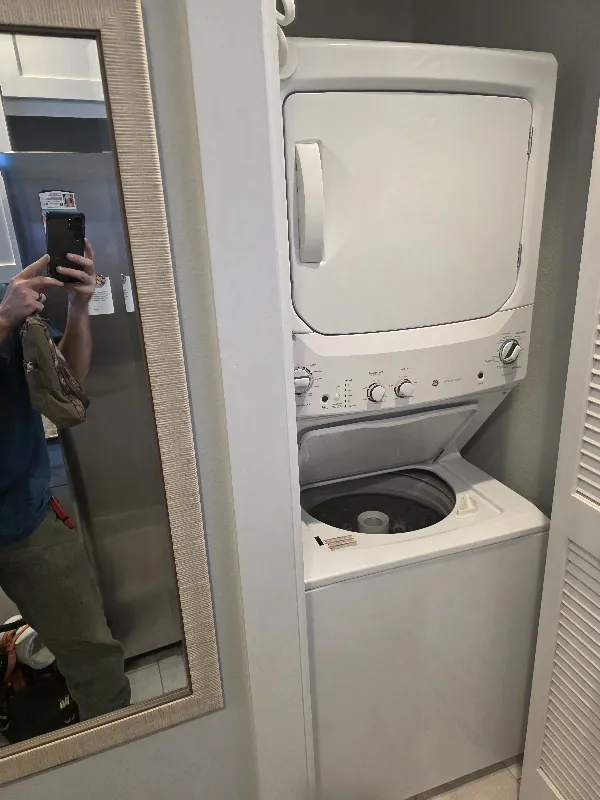
GE Appliances gives similar advice for an electric dryer that runs but does not heat: a damaged, loose, or incorrect power connection can cause the problem. The repair path depends on the model and the home's electrical setup, so a visual inspection from the outside is the right limit for a homeowner.
5. Treat gas-dryer concerns differently
A gas dryer has a different heat source, so the drum can turn even when the burner is not producing heat. If the dryer is connected to gas, do not try to test burners, igniters, valves, or gas fittings yourself. A gas smell, hissing sound, or suspected leak is a stop-now situation: leave the area, avoid switches or flames, and contact the appropriate emergency or gas-service provider.
When there is no gas smell and the appliance is otherwise safe, use the owner's manual to confirm the dryer is set to a heated cycle and that any accessible shutoff information matches the model's instructions. Maytag's gas dryer support notes that a dryer can tumble without heating when the gas supply is not available. That is a useful clue, not an invitation to take the dryer apart.
What a repair visit may need to diagnose
After the safe checks, the remaining causes are usually inside the appliance or tied to the home's power or gas supply. Depending on the dryer, a technician may need to assess the heating element, thermal fuse, thermostat, igniter, gas valve components, sensors, wiring, control board, or venting path. The correct repair depends on the model and the symptoms. Replacing a part because it sounds likely is how a straightforward repair becomes a pile of wrong parts.
When you call, have the brand and model number ready if possible. Note whether the drum turns, whether the inside ever gets warm, whether the issue happens on every cycle, whether the dryer is electric or gas, and whether you have noticed weak airflow outside. Those details help People 1st Home Services start in the right place when you schedule dryer repair.
When it is time to stop troubleshooting
Simple checks are useful because they can catch a wrong setting, a full lint screen, or a visibly crushed hose. They are not a substitute for diagnosis when the dryer is truly cold or showing signs of electrical, gas, or overheating trouble. Call for service when a heated cycle produces no warmth after the safe checks, the breaker keeps tripping, the dryer smells burnt, a cord or outlet looks damaged, the exterior airflow is weak, or a gas dryer has any supply concern.
For homeowners in the communities People 1st serves, the next step is straightforward. Review the service areas, then book a visit or call with the model and symptoms. A clear description helps the technician spend less time chasing basic clues and more time getting the laundry routine back on track.
What not to do with a dryer that is not heating
It is understandable to want a fast answer when laundry is piling up, but a no-heat problem is not the moment to experiment with online repair shortcuts. Do not bypass a door switch, jam a control, remove a panel while the dryer is plugged in, probe wiring, or replace a part simply because a video named it as a possible cause. Dryers vary by brand, model, fuel type, and control system. A repair that applies to one machine can be wrong for the next.
Also avoid pushing the dryer hard against the wall after checking the hose. A crushed vent can quietly undo the point of the inspection. If you moved the appliance, make sure the cord, vent hose, and any gas connection are not pulled tight or trapped. When the appliance is safe but still will not heat, leave it off until the cause is identified. That protects the dryer, keeps the symptom clear, and avoids adding another potential issue to the original problem.
A quick checklist before you book
- Stop using the dryer immediately for burning smells, smoke, a damaged cord, repeated breaker trips, or a possible gas leak.
- Confirm you selected a heated cycle, not air-only, fluff, cool-down, or a low-heat fabric setting.
- Clean the lint screen and look for a visible kink, crushing, or loose connection in the vent hose.
- Try one normal-size load, especially if the washer left the laundry unusually wet.
- For an electric dryer, check the correct breaker once. Do not repeatedly reset a breaker that trips again.
- Have the brand, model, dryer type, and exact symptoms ready when you call.
Dryer running but no heat?
Tell us what the dryer is doing, and choose a convenient time for a repair visit.
Frequently asked questions
Why does my dryer run but not heat?+
A dryer can still tumble when it has a heat-related problem. Depending on the type of dryer, common causes can include an air-only setting, a power issue, restricted airflow, a closed gas supply valve, or an internal component that needs diagnosis. Start with safe external checks and stop using the dryer if you notice burning smells, scorching, repeated breaker trips or damaged cords.
Can a clogged vent make a dryer stop heating?+
A blocked vent more often causes long dry times because heat and moisture cannot leave the dryer properly. It can also put extra strain on the appliance. Clean the lint screen after every load, check the visible vent hose for a sharp kink or crushing, and arrange professional vent cleaning or appliance service when airflow outside is weak or the problem keeps returning.
Why would an electric dryer spin but have no heat?+
Electric dryers commonly use two sides of a 240-volt supply. One side can allow the drum to tumble while the other is needed for the heating element. A tripped breaker or power issue can therefore leave a dryer running without producing heat. Do not remove electrical covers or test wiring yourself. Use the owner's manual and a qualified technician or electrician when the breaker does not stay reset.
When should I call for dryer repair?+
Call for help when the dryer remains cold on a heated cycle after safe checks, clothes take much longer than usual to dry, the dryer smells hot or burnt, the breaker trips, the vent connection is damaged, or a gas dryer has a possible gas-supply concern. These signs are not a good fit for repeated resets or taking the appliance apart.