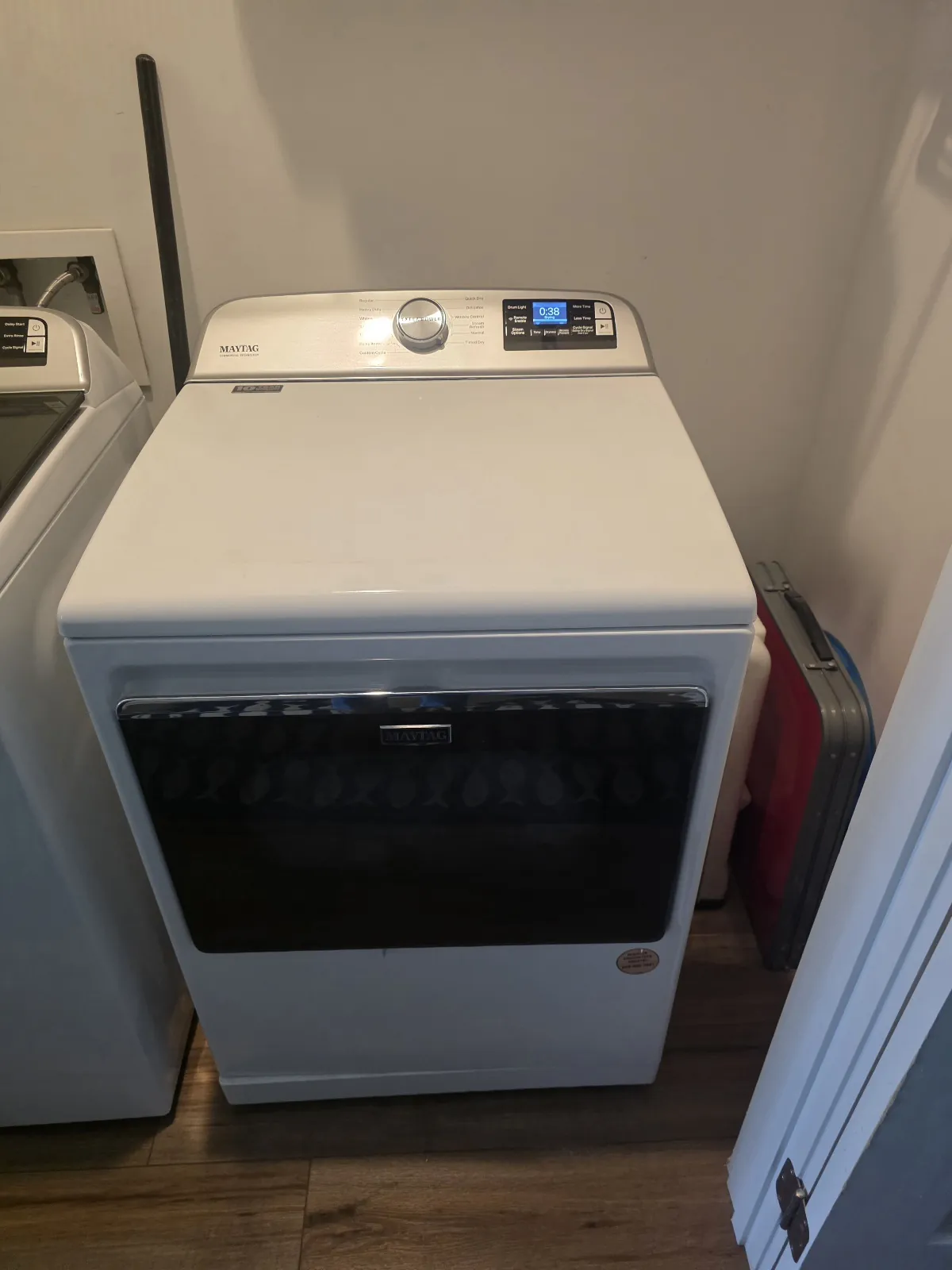
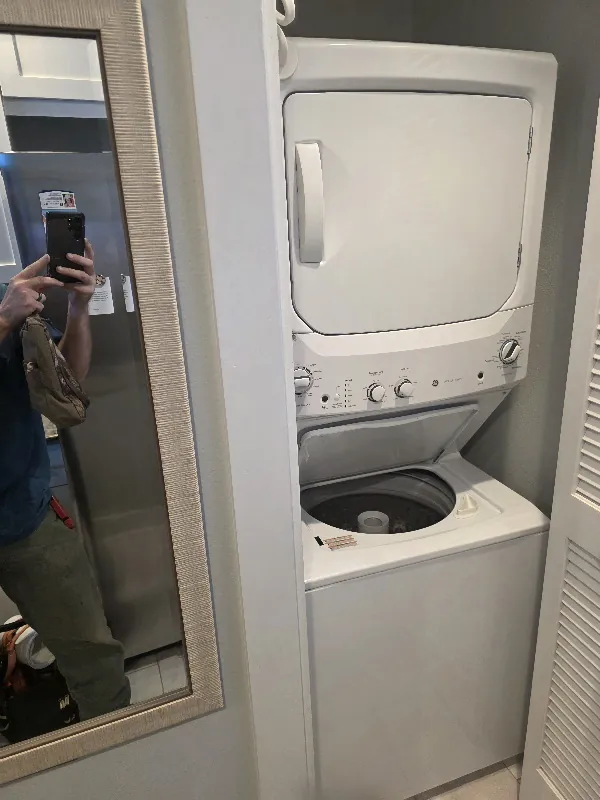
A dryer rarely stays perfectly silent. A soft whir, a gentle hum, or the occasional sound from a zipper can be part of an ordinary laundry day. A new squeak is different, especially when it starts partway through every cycle, becomes sharper as the drum turns, or keeps returning after the load is removed. The sound may come from something simple and visible, but it can also be the dryer’s way of telling you that a moving part or the installation needs attention.
You do not need to take a dryer apart to make a good first decision. The useful goal is to separate a loose item or an uneven load from a sound that repeats with normal use. People 1st Home Services helps with dryer repair across Walton County and nearby communities. A clear description of the noise and when it happens can give the repair visit a much better starting point.
Turn the dryer off and leave it off for burning smells, smoke, a damaged cord, repeated breaker trips, a hot outlet, metal scraping, a loud grinding sound, or anything that seems unsafe. Do not remove panels, spray lubricant into the appliance, reach behind a connected dryer, or keep restarting a loud cycle to see whether the sound goes away.
First, listen for the type of noise
The word “squeak” can describe several very different sounds. A light rattle may be a coin, button, zipper, or small object moving with the load. A dull thump can come from a bundled towel, a bulky item, or a dryer that has been sitting unused. A high, repeatable squeal often deserves more attention, particularly when it follows the drum’s rotation. Whirlpool’s guide to loud dryer noises separates rattling, thumping, squeaking, grinding, and rumbling because the sound itself can help narrow the next safe step.
Notice whether the sound begins immediately, after the dryer warms up, only with a heavy load, or even when the drum is empty. Also notice whether the dryer is still heating and drying as expected. If laundry is warm but taking two or three cycles, the related long dry-time guide can help you check airflow and load size. If the drum turns but the laundry stays cold, use the dryer not heating guide. One clear symptom is more useful than trying several unrelated fixes.
1. Stop the cycle and check the load
Before looking at the dryer itself, stop the cycle and let the drum come to a complete stop. Check pockets and the drum for coins, keys, paper clips, buttons, buckles, and anything else that could strike the inside as the dryer turns. LG notes that loose items such as coins and keys can make loud noise and damage the dryer. Remove the item, then use one ordinary load to see whether the sound is gone.
Also look at the size and shape of the load. A few heavy wet towels, shoes, a comforter, or clothes gathered into one dense ball can thump or make the dryer work harder than a normal mixed load. Samsung advises reducing an unusually heavy load when a dryer is squealing, squeaking, or grinding. Do not try to solve the problem with an overloaded “test” load. A normal mixed load gives you a clearer answer.
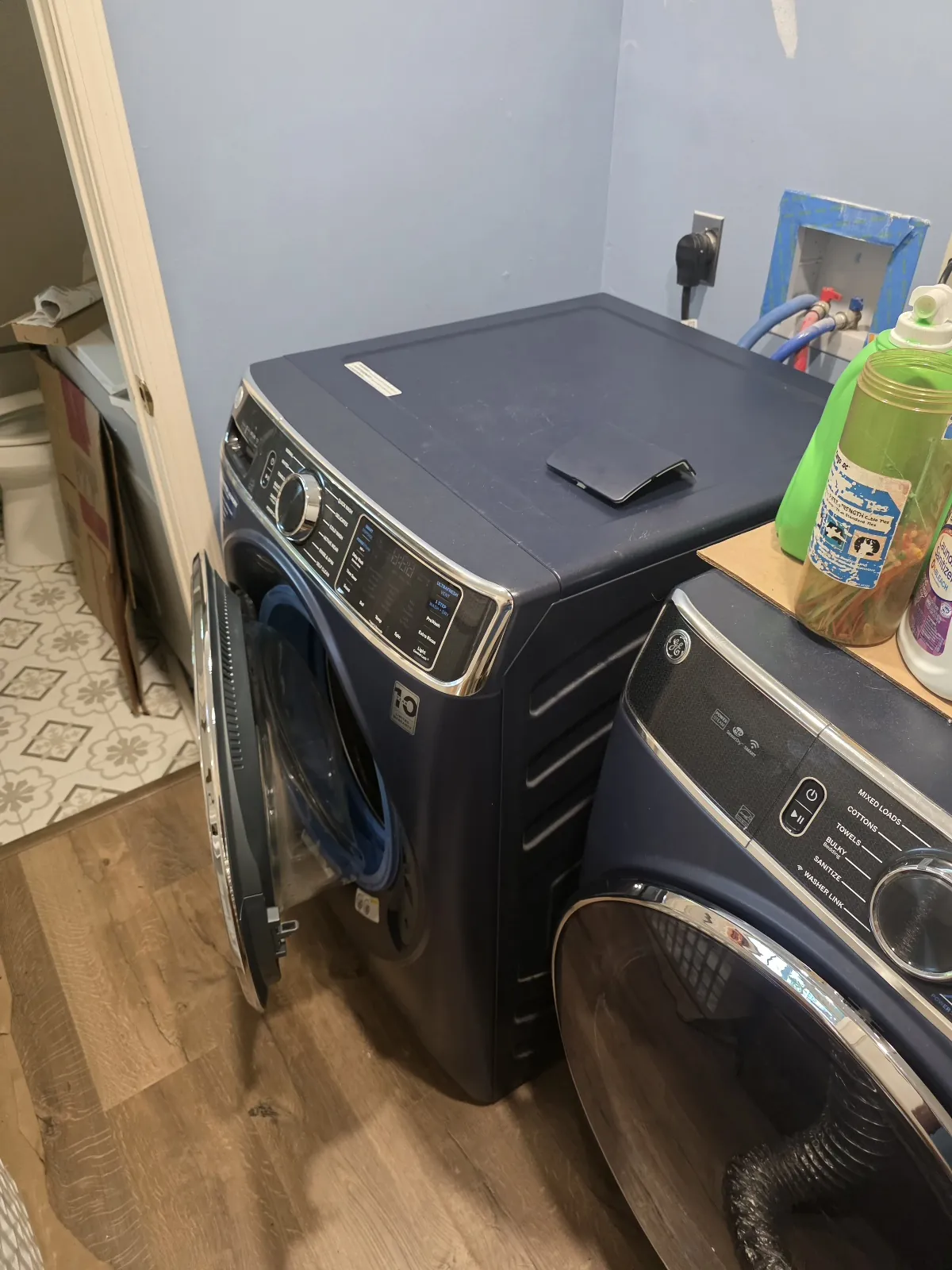
2. Check that nothing is touching or leaning on the dryer
With the dryer off, look around the cabinet. A basket, bottle, loose vent hose, power cord, wall trim, or item left on top can rattle when the dryer vibrates. If the dryer was recently moved for cleaning, a repair, or a renovation, it may no longer be sitting firmly on the floor. Whirlpool recommends checking that the appliance is level because an unsteady dryer can create rattling and extra vibration.
Do not pull the dryer away from the wall by its cord, vent, or gas connection. You are only looking for an obvious contact point or a machine that visibly rocks. If the owner’s manual gives a model-specific leveling procedure, follow that procedure with the dryer off. A dryer that still moves, rattles against the wall, or shifts its visible connections should be checked rather than repeatedly run.
3. Clean the lint screen and look only at the accessible lint area
A clean lint screen is part of ordinary dryer care, and it matters even when the complaint is noise. Whirlpool explains that lint buildup inside a dryer can contribute to squealing or squeaking around belts and pulleys. Clean the screen after every load, then look into the screen opening only as far as your model’s manual permits. If you can see a small loose object near the opening, use the manufacturer-approved method to remove it. Do not reach into a sharp-edged housing or take off a panel.
Keep the lint screen installed whenever the dryer is operating. If the screen looks coated with residue from fabric softener or dryer sheets, use the manual’s approved cleaning instructions. A clean screen and one normal test load can help you decide whether the problem was external. It cannot prove that an internal belt, roller, pulley, bearing, or blower component is sound, and it should not become a reason to keep using a dryer that still squeals loudly.
4. Pay attention to when the squeak starts
A brief sound at the beginning of a cycle is not the same as a sharp noise that repeats through the entire load. Some dryer designs may make a temporary sound as the drum starts or reverses direction. LG notes that belt friction can create a brief squeak on some heat-pump dryer models during startup or reversal. The key word is brief. A sound that becomes louder, stays with every rotation, or appears with a normal load is a different situation.
Make a simple note: Does it start when the drum first turns? Does it change after ten minutes? Does it happen only when the dryer is hot? Does it continue after the laundry is removed? You do not need to locate a part to make the information useful. A technician can diagnose the actual source, while your observation helps avoid a vague “dryer noise” description that could mean almost anything.
5. Do not guess at an internal repair
A persistent squeak can involve parts that are inside the dryer and vary by model. Whirlpool lists worn belts, pulleys, drum bearings, roller shafts, drum glides, and motor-related concerns among the possibilities for squeaking noises. GE Appliances also notes that a damaged belt, worn drum slides, or foreign object around the drum area can create unusual sound. Those are useful possibilities, not a shopping list for a homeowner to work through.
Do not take the cabinet apart, bypass a switch, add grease or oil to an unknown component, or order a part based only on the sound. Dryers can be electric or gas, and the same noise can have a different source depending on the model. An incorrect repair can create a new safety problem, damage the appliance, or hide the original symptom. If the dryer needs internal diagnosis, the right next step is a repair visit.
What a repair visit may need to check
Once the visible checks are out of the way, the source of a squeak is usually something that needs the dryer opened and assessed safely. Depending on the model and the exact sound, a technician may need to inspect the drum support system, belt path, pulley movement, rollers, blower area, motor, mounting, or an object that has moved where it does not belong. The useful repair decision comes from matching the appliance, the sound, and the inspection, not from choosing the most likely part online.
A good service visit also looks at the context around the noise. A dryer that squeaks after being moved may have a setup or contact issue. A dryer that squeaks alongside weak airflow or long dry times can have more than one concern worth checking. A dryer that makes noise only with one oversized item may need a different laundry approach rather than a replacement part. These distinctions are why a few clear observations from ordinary use are more valuable than a homeowner trying to reproduce a repair video.
If the appliance is safe to leave in place, write down the brand, model, dryer type, and any error code before the visit. Note whether the sound happens at startup, throughout the cycle, or near the end, and whether it changes with the load size. That information does not replace diagnosis, but it helps the technician begin with the real behavior instead of a guess.
6. Know which sounds should end the test
It is reasonable to check one normal load, the pockets, the lint screen, and the dryer’s visible position. It is not reasonable to keep running a dryer through a sharp squeal, metal scrape, hard grind, burning smell, or new electrical concern. GE advises discontinuing use when unusual dryer noises continue after straightforward checks, because continued use can wear other parts and make the repair more costly.
Stop and arrange service if the sound is loud or repeatable, the dryer struggles to turn, the drum rubs or scrapes, the dryer gets unusually hot, airflow outside is weak, or any other warning sign appears. For an urgent gas smell, leave the area and follow the gas utility’s emergency guidance. Do not try to diagnose a gas connection or relight anything yourself.
How People 1st Home Services can help
A squeaking dryer is frustrating because the laundry can still seem to be working until the sound turns into a more serious interruption. People 1st Home Services can assess the appliance, start with the symptom you observed, and help determine whether the noise is related to the drum, support parts, airflow, installation, or another issue that needs attention.
When you are ready, use the service-area page to check coverage, then make an appointment or call. Share the dryer type, the sound you hear, when it starts, whether the appliance is still heating, and whether it was moved recently. The model number is helpful if it is easy to find, but you do not need to delay a service request to search for it.
A quick, safe recap
- Stop the dryer immediately for a burning smell, smoke, a damaged cord, repeated breaker trips, grinding, or metal scraping.
- Check one stopped load for coins, zippers, buttons, or other loose items.
- Use one ordinary mixed load, not a heavy or overloaded test load.
- Look for obvious contact around the dryer and follow the owner’s manual for any leveling step.
- Clean the lint screen and use only the model-approved method for any accessible lint area.
- Book repair when a squeak, squeal, rattle, or grind keeps returning.
Dryer making a new sound?
Tell us what you hear, and choose a convenient time for a repair visit.
Frequently asked questions
Why is my dryer suddenly squeaking?+
A dryer can squeak because something is loose in the drum, the appliance is not sitting securely, lint or a small item is affecting airflow, or an internal moving part needs attention. A quick check of the load, pockets, lint screen, and the dryer’s visible position can rule out a few simple causes. A squeak that returns with an ordinary load or an empty drum needs professional diagnosis.
Can I keep using a dryer that squeaks?+
Do not keep using a dryer that has a loud, persistent, grinding, scraping, burning, or metal-on-metal sound. Stop immediately for burning smells, smoke, a damaged cord, repeated breaker trips, or a sound that becomes louder. A brief noise from a zipper or button may be harmless once the item is removed, but a new repeatable squeak can worsen when the dryer keeps running.
Can lint cause a dryer to squeak?+
Lint buildup can contribute to noise around a dryer’s belt and pulleys, according to Whirlpool. Clean the lint screen after every load and use the model’s manual for any approved deeper cleaning. Do not remove panels or reach into areas you cannot safely access. A persistent squeak may need a service visit to identify the source safely.
What should I tell a dryer repair technician?+
Tell the technician whether the sound is a squeak, squeal, rattle, thump, grind, or buzz, when it starts, whether it happens with every load, and whether the dryer still heats and dries normally. The brand and model number can help if they are easy to find. Mention any burning smell, weak airflow, error code, recent move, or change in the sound.