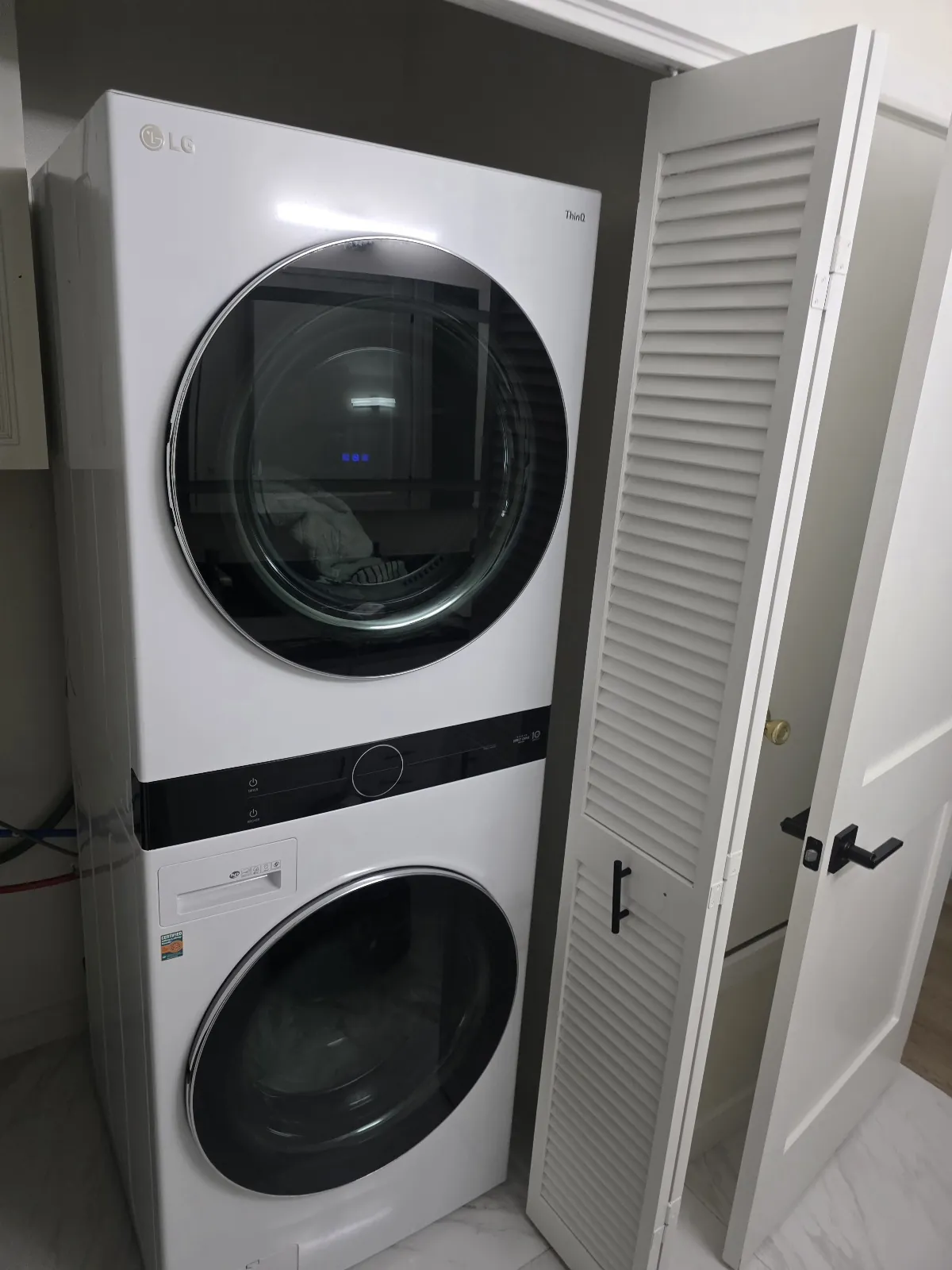
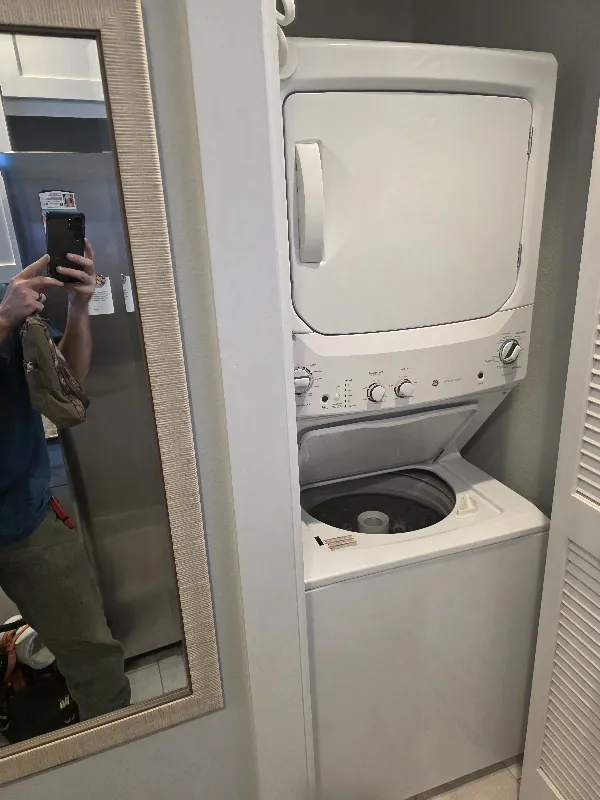
A laundry tower puts a full-size washer and dryer into one vertical setup. That makes good use of space, but it also means a drainage problem can stop both sides of the laundry routine. You may find water in the drum, clothes that are much wetter than usual, a spin that never begins, or a display that shows an error before the cycle finishes.
The goal is not to pull a stacked unit apart, reach behind it, or order a part based on a guess. It is to make a few safe observations, follow only the care steps approved for your model, and recognize when the machine or the household drain needs professional attention. People 1st Home Services provides laundry tower repair for homeowners across Walton County and nearby communities.
Stop using the laundry tower if water is reaching the floor, you smell burning, the unit trips a breaker, a cord or outlet looks damaged, or you hear sharp grinding. Do not remove panels, tip the tower, pull it away by the hoses, or try to force a stuck door. A stacked appliance is heavy and connected to power, water, and a drain line.
First, separate a normal pause from a real drainage problem
Some washers pause briefly while changing between wash, drain, and spin. That can look worrying when you are waiting for the water to leave the drum. A short quiet interval is not automatically a failure. A real drainage concern is more likely when water remains well above the bottom of the drum, the tower repeatedly stops at the same point, the clothes are soaking wet at the end, or an error code appears.
Take a moment to notice what happened right before the problem. Did the tower stop during the wash? Did it drain some water and then quit? Is the washer side trying to spin but refusing to get up to speed? Did the issue begin after moving the appliance, changing detergent, washing a bulky item, or doing work near the laundry plumbing? Those details help make a repair visit more useful when you make an appointment.
1. Check the load before you assume the tower is broken
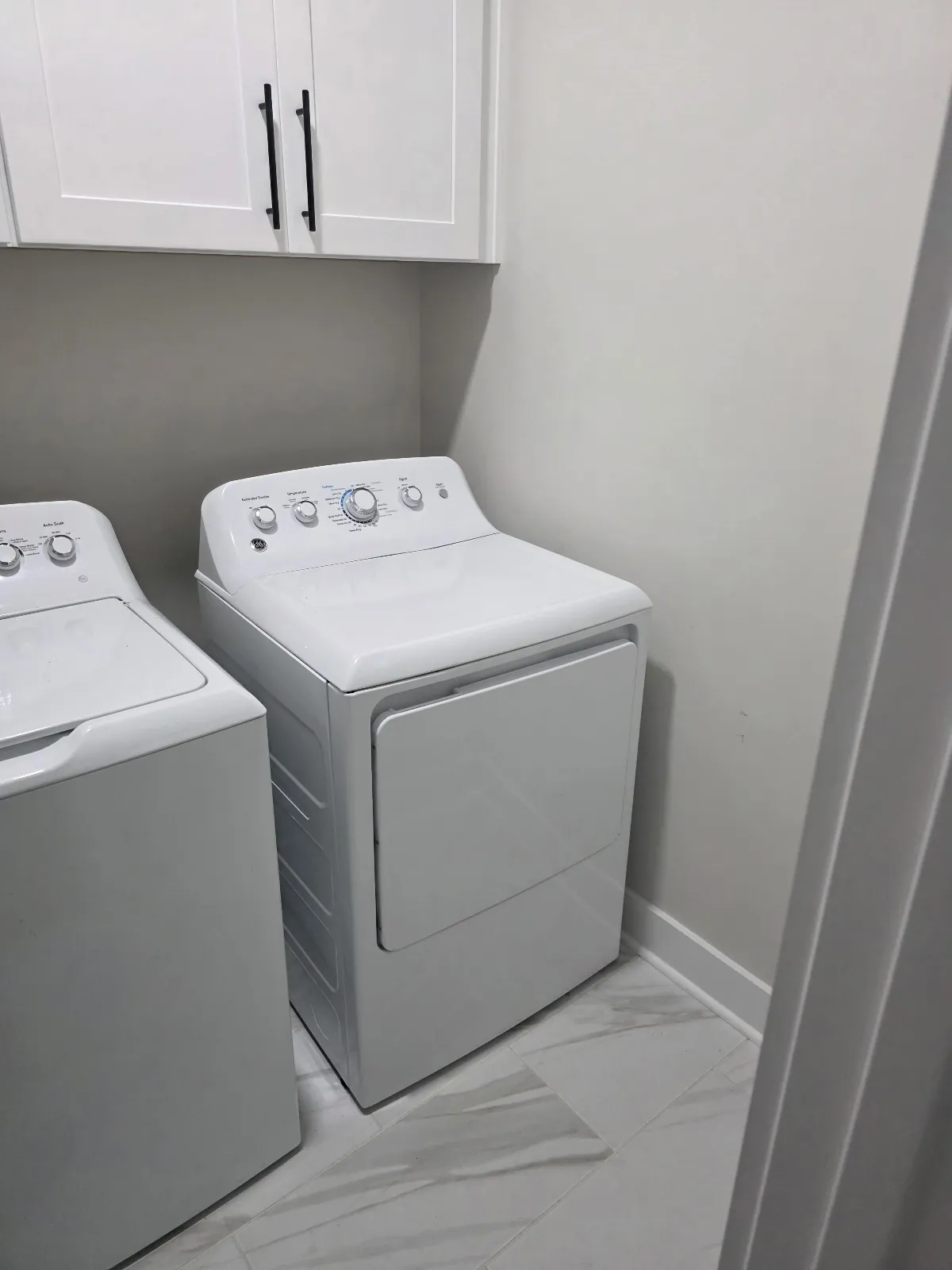
A single bulky item, such as a comforter, bath mat, or thick blanket, can bunch to one side of the washer. An uneven load may prevent the machine from reaching a normal spin, leaving extra water in the drum and laundry. Whirlpool includes unbalanced loads among the first things to check when a washer will not spin as expected in its washer troubleshooting guidance. That does not mean every slow or failed drain is a load problem, but it is a safe place to start.
Pause the cycle only as your model allows, then redistribute the laundry if the machine is not holding an unsafe amount of water. For a small load, avoid washing one heavy item alone. For a large mixed load, remove a few pieces so there is room for items to move. Then use one model-approved drain and spin or spin-only option if the owner manual describes one. Do not keep restarting a full wash cycle, which can add more water and make the original symptom harder to read.
If the tower drains and spins normally after one balanced test load, the original load may have been the issue. If the machine still leaves water behind with a normal-sized load, move on to the visible checks instead of repeating the same test.
2. Look for a visible kink or crushing in the drain hose
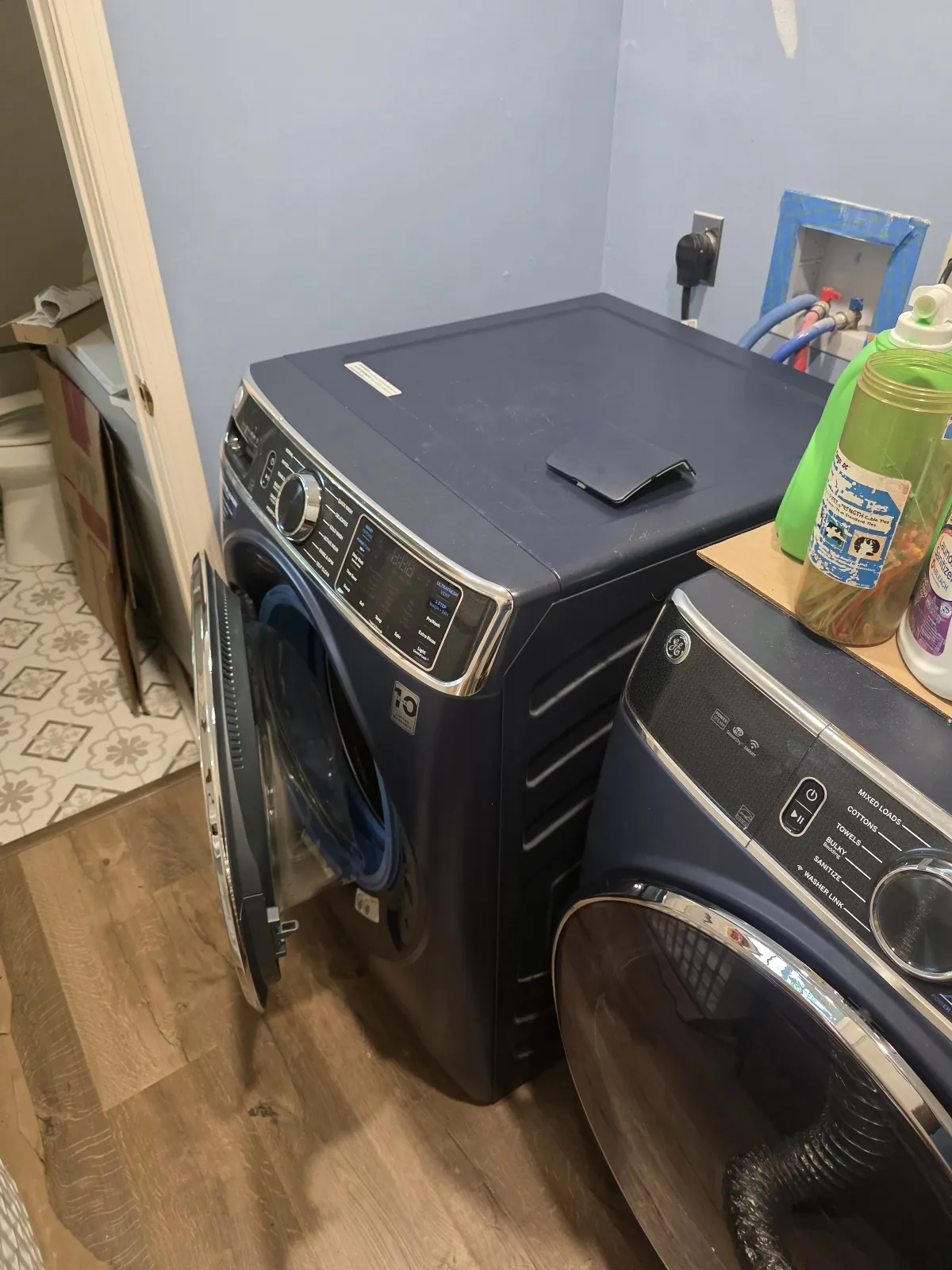
The drain hose carries used water from the washer to the household standpipe, drain, or laundry sink. A sharp bend, crushed section, or hose trapped behind the tower can slow or stop that flow. LG includes checking the drain hose among the first steps in its washer drainage guidance.
With the tower off, look only at the portion of the hose you can see safely. You are looking for a clear sharp bend, visible damage, or something stored against the hose. Do not pull the tower forward by yourself, tug on the hose, or disconnect the plumbing to investigate farther. A heavy stacked appliance can shift, a hose connection can loosen, and a small drain issue can turn into a floor leak.
Do not tape the hose into the standpipe or try to change its height by guesswork. Drain-hose placement is model-specific, and a hose that is routed or inserted incorrectly can keep the washer from draining normally. The installation instructions for your exact laundry tower are the final word.
3. Check whether the household drain is the bottleneck
Sometimes the laundry tower is trying to do its job, but the household drain cannot accept the water. A slow standpipe, backed-up laundry sink, or plumbing obstruction can make water remain in the washer or push it back toward the appliance. This can be especially noticeable when a large load drains all at once.
Look for simple, visible signs without disconnecting anything: water rising in a laundry sink, water around the standpipe, a drain that gurgles loudly, or a fresh plumbing backup. If you see water backing up in the household drain, that points to a plumbing issue that should be assessed rather than a reason to keep running the washer.
Do not add liquid drain cleaner to a washing machine, pour chemicals into a standpipe near the appliance, or use a hose or wire to probe hidden plumbing. Those shortcuts can damage equipment, create a spill, or hide the actual issue. A clear report such as “the laundry sink backs up when the washer drains” is far more useful than a series of improvised fixes.
4. Use only the filter care your model allows
Many front-load washers have a drain-pump filter, but not every laundry tower gives the owner access to it in the same way. LG's front-load washer maintenance guidance includes drain-filter care for models designed with that owner-accessible part. On some models, there is a small lower access door and a controlled way to catch residual water. On others, the filter is not meant to be opened by the homeowner at all.
Find the owner manual for the exact brand and model before opening any panel. If it identifies an owner-accessible filter, use the stated process, gather towels and a shallow pan, and expect some residual water. Clean only loose debris that the instructions allow you to remove. Put every cap, plug, and filter back exactly as directed before using the tower again.
Do not force a cover open, reach into a hidden pump cavity, or remove the front, rear, or top panels of the unit. A laundry tower is not a standard side-by-side pair. Accessing internal parts can require supporting the stacked dryer section, working near electrical connections, and resealing water paths correctly. That is repair work, not routine maintenance.
5. Think about detergent and suds
Too much detergent can create a surprising drainage or spin complaint. Excess suds can make it harder for a washer to pump water and reach a normal spin. Whirlpool includes excess suds in its washer troubleshooting guidance, and the right detergent amount remains model-specific.
Think back to whether the issue began after changing detergent, adding extra product, using a pod in the wrong place, or washing a smaller load with the amount meant for a full one. If you can see an unusual amount of foam, do not add more detergent and do not start another complete cycle just to “wash it out.” Follow the manual’s instructions for excess suds or use the model-approved rinse or drain option once.
Detergent is not the explanation for every drainage issue. If the same problem happens with measured detergent and a normal load, the drain hose, household plumbing, pump, door lock, or controls may need a closer look. The useful step is to rule out an easy variable without assuming it solved the whole problem.
6. Write down the error code and what the tower does
An error code is not a diagnosis by itself, but it is valuable information. For example, LG uses an OE code for a drainage issue on many compatible washers, as explained in its official drainage support guidance. Other brands use their own names and codes. Take a photo or write the code down exactly, then use the owner manual or the manufacturer’s official support page for that model.
Also note what you hear and see. Does the washer hum but not move water? Does it try to spin and stop? Does the door stay locked with water in the drum? Does it make a new rattling or grinding sound? Does the problem happen with every load or only bulky items? This gives a technician a stronger starting point than “it quit,” and it helps avoid replacing parts based on a broad symptom.
Do not clear a repeating code over and over or use a random reset sequence from another model. One controlled, model-approved reset may be reasonable after a safe check. A code that returns, especially with standing water or a new noise, is the sign to arrange service.
When a laundry tower that will not drain needs repair
Safe checks can catch a lopsided load, a visibly pinched drain hose, excess suds, or a household drain backup. They cannot safely diagnose a drain pump, door lock, wiring concern, pressure sensor, control issue, internal obstruction, or installation problem hidden behind the tower. Continuing to run a machine that keeps water inside can create a larger laundry interruption and may lead to a leak.
Arrange service when the tower repeatedly leaves water after a balanced test load and owner-approved care, when the hose and visible plumbing look normal, when a code keeps returning, or when the washer side will not spin. Stop using it right away for water on the floor, burning odors, a damaged cord, breaker trips, smoke, or a loud grinding noise.
People 1st Home Services can help with laundry tower repair across the communities we serve. If the tower is a combo unit rather than a stacked washer and dryer, the all-in-one washer dryer guide explains why its care needs can be different.
What to have ready when you book
Before you call, write down the brand and model number if it is easy to find. Mention whether water is left in the drum, whether the machine will spin, whether you saw an error code, and whether the issue started after moving the appliance or changing detergent. If the household drain or laundry sink is backing up, include that too.
You do not need to take the tower apart or identify the failed part. A clear description such as “the washer stops before spin and leaves clothes soaked,” “the pump hums but water stays in the drum,” or “the standpipe backs up when it drains” gives the service visit a much better starting point.
A quick checklist before you book
- Stop using the tower for a leak, burning smell, damaged cord, breaker trip, smoke, or sharp grinding sound.
- Wait through a normal brief pause, then confirm that water is truly remaining in the washer drum.
- Redistribute an uneven load and try one model-approved drain and spin or spin-only cycle.
- Look for a visible kink, crush, or damage in the accessible drain hose, without moving or disconnecting the tower.
- Check for a visible household plumbing backup at the laundry sink or standpipe.
- Clean a pump filter only when your exact owner manual identifies it as owner-accessible.
- Use measured detergent, record any error code, and arrange repair if the problem returns.
Laundry tower leaving water behind?
Tell us what changed, and choose a convenient time for a repair visit.
Frequently asked questions
Why is my laundry tower leaving water in the washer?+
A laundry tower may leave water behind because a drain hose is kinked or compressed, the household drain is backed up, the load is unbalanced, excess detergent created too many suds, or a model-specific pump, door-lock, or control issue needs diagnosis. The owner's manual is the right source for the exact model because filter access and drain steps vary.
Can I run a drain and spin cycle on a laundry tower?+
Use a drain and spin or spin-only cycle only when the owner's manual for your exact model describes it and there is no leak, burning smell, electrical concern, or unsafe noise. One controlled attempt can be useful. Repeatedly restarting full wash cycles can add more water and hide the original problem.
Should I clean the drain pump filter myself?+
Only if your laundry tower's owner manual identifies a filter as owner-accessible and gives the cleaning procedure. Some front-load models have an access door near the bottom, while other units do not. Do not remove panels, pull the stacked unit apart, or force open a cover that your manual does not identify.
When should I book laundry tower repair?+
Arrange repair when standing water returns after safe checks, the tower will not spin, an error code repeats, the drain hose and household drain appear clear, or the unit leaks, smells hot, trips power, grinds, or makes a new loud noise. A technician can safely diagnose the pump, drain route, door lock, wiring, and controls.