Some movement during a washer’s spin cycle is normal. The basket is removing a lot of water at high speed, and a heavy load can make the machine work harder. What is not normal is a washer that begins slamming, walking across the floor, rattling the room, or suddenly behaving differently from its usual spin. That kind of change can turn one load of laundry into a concern about hoses, flooring, or the appliance itself.
You do not need to take the washer apart to make a useful first decision. The goal is to stop anything unsafe, look at the load and the machine’s visible position, then recognize when the problem keeps returning. People 1st Home Services provides washer repair for households across Walton County and nearby communities, including DeFuniak Springs washer repair.
Do not try to hold, brace, or push a washer while it is spinning. Stop the cycle if you can do so safely when the appliance is moving across the floor, leaking, pulling on a hose, making a sharp grinding sound, smelling hot, or showing smoke. Water near electricity, a damaged cord, or a burning smell is a stop-use situation, not a troubleshooting project.
First, separate ordinary vibration from a new problem
A washer can vibrate more with a bulky or uneven load, particularly during the fastest part of spin. A one-time thump from a comforter or a bundle of towels is different from a loud repeatable bang with every load. Think about what changed: Was the washer recently moved? Is the problem limited to bedding? Does the machine shake before it begins spinning, or only once the basket speeds up? Does it also leave clothes soaking wet?
Those details make the next step clearer. If the washer cannot finish spin or leaves water behind, use the related washing machine not spinning guide and washer not draining guide. If there is water on the floor, the washer leak guide helps you make a safer first observation.
It also helps to notice whether the washer is an older familiar machine that has only recently changed, or a new appliance that has never settled into a normal routine. A sudden change after months of ordinary use is useful repair information. A new problem that appears only on one special load may be easier to narrow down safely at home. In either case, a short note before you book can keep the service visit focused on the behavior you actually saw.
1. Pause and redistribute one uneven load
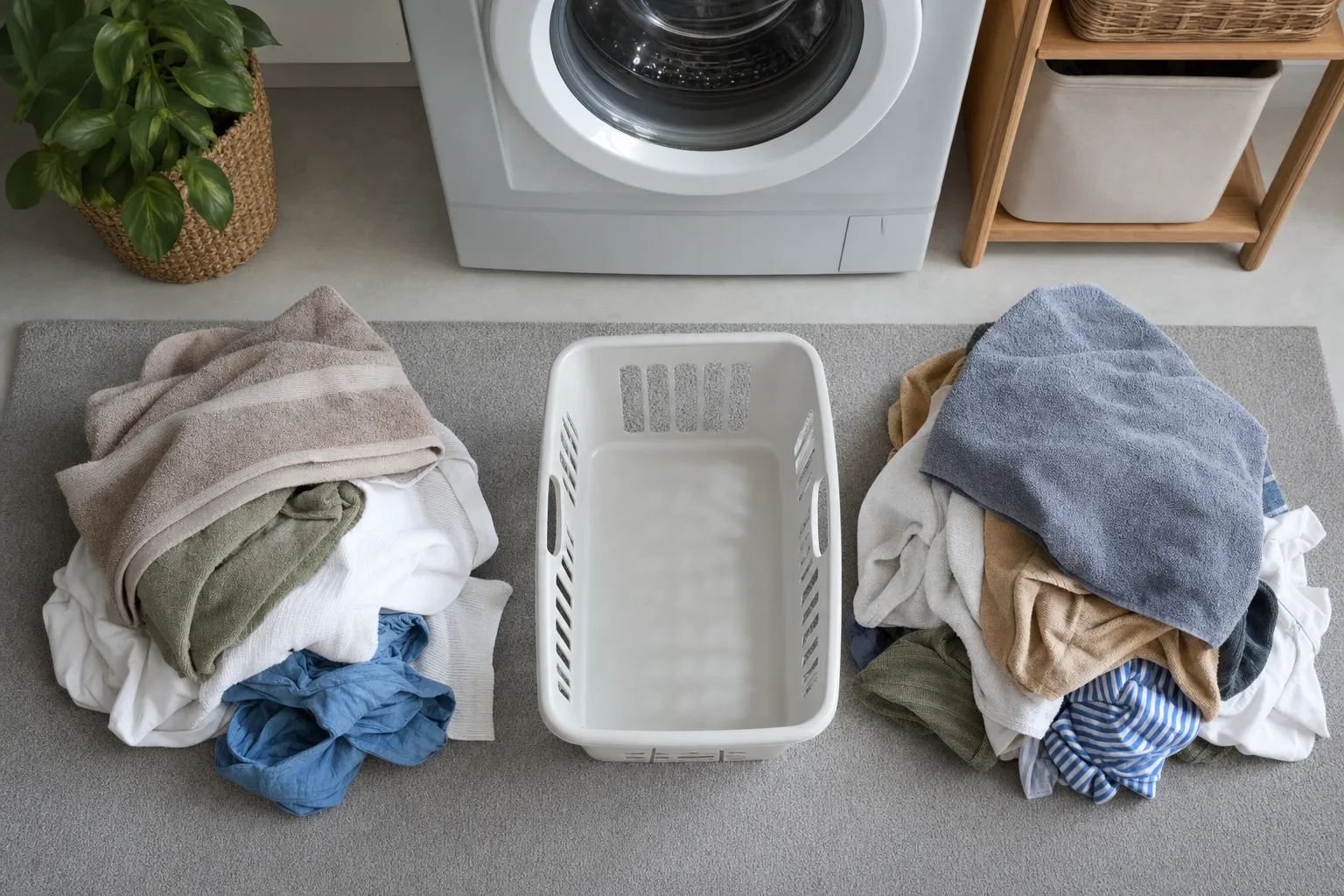
An unbalanced load is the simplest place to start. Heavy items can bunch on one side of the basket, especially a comforter, bath mat, pair of sneakers, or a small load of dense towels. When the weight is concentrated in one place, the basket can swing as it speeds up and the washer may shake or bang against its own cabinet.
Once the cycle has stopped, open the lid or door only when the washer allows it. Spread the items around the basket or remove one heavy item. Then run one normal-size test load rather than another overloaded load. Whirlpool includes unbalanced or overloaded loads among the common reasons a washer may not spin normally in its washer spin guidance. If the washer settles down after one balanced load, the original load likely explains the noise. If it still shakes hard with a normal load, do not keep repeating the test.
2. Do not overload the drum
A full-looking washer is not always an overloaded washer, but clothes need room to move and redistribute. Packing the drum tightly can trap bulky items together and make it harder for the basket to balance itself. It can also leave laundry unevenly washed or unusually wet at the end of the cycle, which sends the problem downstream to the dryer.
For a test load, use everyday clothing with a mix of lighter and heavier pieces. Avoid trying to fix a vibration problem with more laundry, less laundry, and several cycle changes all at once. One reasonable load and one normal cycle gives you a much clearer result. If the washer shakes only with bedding or other bulky items, the appliance manual may offer specific directions for those loads.
3. Check whether the washer is sitting level
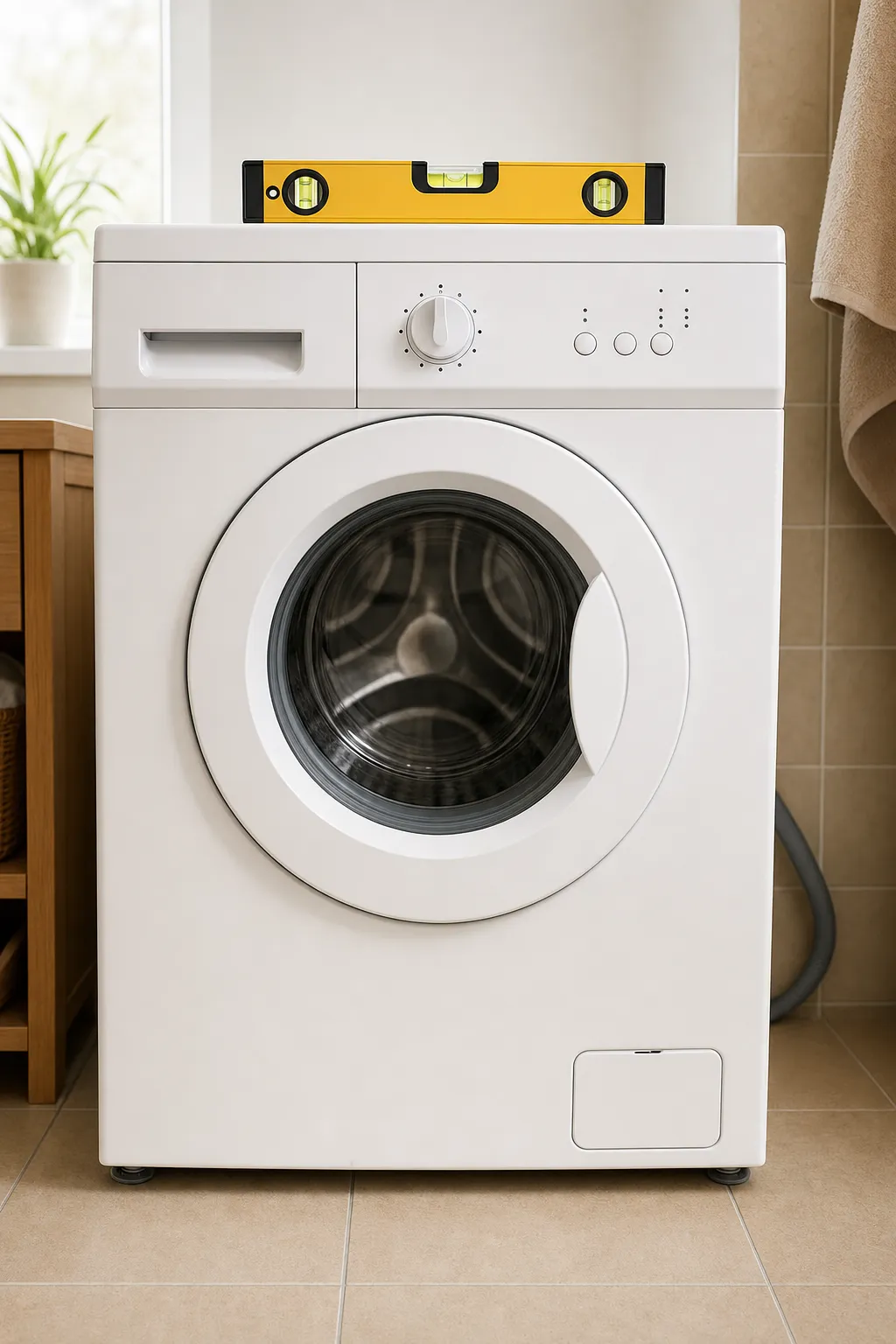
A washer needs firm, even contact with the floor. If one leveling foot is loose, the floor is uneven, or the machine was shifted during cleaning or a move, the cabinet can rock and amplify normal spin movement. With the washer off, place a hand on opposite top corners and gently check for a visible wobble. Do not climb on the washer or pull it away from the wall by the hoses or cord.
If your manual shows how to adjust the leveling feet, use that model-specific guidance. A basic level can help confirm whether the top surface is visibly off, but it does not diagnose every vibration problem. A machine that continues to wobble after a careful adjustment, or one sitting on a soft or uneven floor, needs more than another high-speed cycle. Leave it off and arrange help rather than forcing the washer to prove the point again.
4. Look for a washer that has shifted from its normal spot
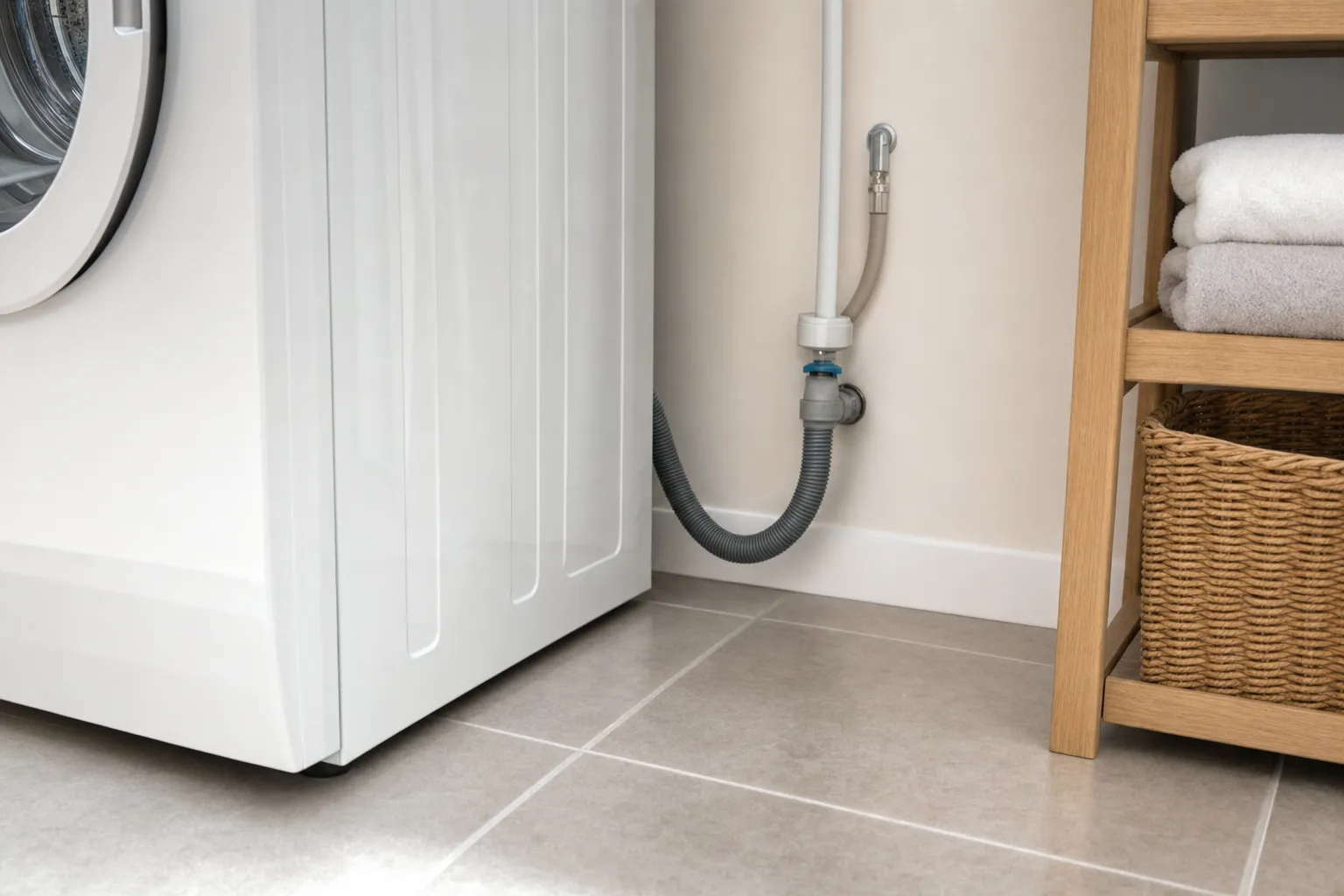
A washer that “walks” can slowly move far enough to strain the water hoses, drain hose, or power cord. Look from the front and sides for a machine that is no longer centered in its usual space, a hose that looks pulled tight, or a drain hose that has become sharply bent. You are only checking what is easy to see. Do not reach behind a connected washer or attempt to reposition a heavy appliance by yourself.
If the hoses are visibly leaking, crushed, or stretched, turn the washer off and avoid another spin cycle. A drain-hose concern can also contribute to water left in the basket, so it is worth separating from a pure vibration problem. Our washer drainage guide covers safe visual checks when the cycle is leaving water behind.
5. Check the setup after a recent move or installation
A newly delivered or recently moved washer can shake because an installation detail was missed. Some machines have shipping bolts, packing materials, or installation steps that must be handled exactly as the manufacturer directs before the appliance is used. These details vary by model, so the installation instructions are the reliable source, not a generic video or a guessed part removal.
Do not remove bolts, panels, or packing pieces unless your own manual clearly identifies them and tells you how. If the washer has shaken badly since its first load, stop using it until the setup can be checked. People 1st also provides appliance installation when a household needs practical help getting a major appliance set up correctly.
6. Listen for sounds that go beyond a normal thump
An occasional dull thump from an uneven towel load is one thing. A repeated grinding, squealing, scraping, metal-on-metal sound, or hard knocking is another. Make a note of when it happens: fill, wash, drain, or spin. You can also note whether the basket seems loose when the washer is off, but do not force or pry at any part of the machine.
Sounds that return with balanced loads can point to parts that need diagnosis, such as suspension components, a drive-system concern, or an internal basket issue. That is not a job for repeated cycles. A short description such as “loud knock during spin with a normal mixed load” is enough to start a repair request. For laundry towers, use the laundry tower drainage guide when spin trouble and water left behind appear together.
Pay attention to the location of the sound as well. A thump from inside the drum is different from a cabinet that rocks against a wall, a hose tapping behind the machine, or an item left in a pocket. Empty the washer only after the cycle stops and check the usual places for a loose coin, key, or small object. When the noise persists with an empty drum or a normal balanced load, leave the appliance off until it can be inspected.
7. Know when to stop testing and book repair
It is reasonable to try one balanced test load and make a visible level check. It is not reasonable to keep restarting a washer that is walking, leaking, shaking with every normal load, or making a new sharp sound. Repeated heavy movement can make a small installation or internal problem more disruptive, especially if it pulls on a hose or creates water where it should not be.
Arrange service when the behavior returns after the basic checks, the washer will not spin smoothly, clothes remain soaking wet, an unfamiliar error code appears, or the machine moves enough to threaten its connections. If you are not sure whether People 1st covers your home, the service-area page makes it easy to check the nearby communities served.
When you make an appointment, share the washer’s brand and model if it is easy to find, but do not delay booking to look for it. The useful details are the cycle where the shaking starts, whether the problem follows every load or only bulky laundry, whether the washer was moved recently, and whether you noticed water, an odor, or an error code. That gives the visit a useful starting point without asking you to diagnose the appliance yourself.
A quick, safe recap
- Stop the washer if it is moving severely, leaking, smelling hot, or pulling on a cord or hose.
- Redistribute one uneven load and test with normal mixed laundry.
- Check for a visible wobble while the washer is off and use the owner’s manual for any model-specific leveling step.
- Look only at easy-to-see hoses and the space around the washer. Do not pull the appliance out by its connections.
- Book a repair visit when hard shaking, walking, leaks, errors, or unusual sounds return.
Washer shaking during spin?
Tell us what changed, and choose a convenient time for a washer repair visit.
Frequently asked questions
Why is my washing machine shaking so hard during spin?+
A washer can shake hard when a load is uneven, the machine is not level, a foot has lost contact with the floor, or a suspension, basket, or drive component needs attention. Start with a balanced load and a visible level check. If the movement is new, severe, or keeps returning with normal loads, arrange diagnosis instead of forcing more cycles through.
Can an unbalanced load make a washer bang?+
Yes. A heavy item, such as a comforter, bath mat, or several towels, can gather on one side of the basket. The washer may pause, thump, or shake as it tries to spin. Redistribute the load once, then use a smaller or more balanced load. Repeated banging with ordinary laundry is a reason to stop and arrange service.
Should I keep using a washer that walks across the floor?+
No. A washer that moves noticeably across the floor can damage flooring, pull on water hoses, or strain its power cord. Stop the cycle if you can do so safely, leave the washer off, and check only for visible load or leveling concerns. Do not push the washer back while it is spinning or keep restarting it to see whether it settles down.
When should I call for washing machine repair?+
Book repair when the washer shakes with normal balanced loads, makes a sharp metal-on-metal sound, leaks, shows an unfamiliar code, will not complete spin, or moves enough to threaten the hoses or cord. Burning smells, smoke, heat at the plug, a damaged cord, or water near electricity are stop-use signs that need prompt attention.