“Won’t start” can mean a few different things. Maybe the display is dark. Maybe the lights come on, but pressing Start does nothing. Maybe the washer locks the door, hums for a moment, or fills a little and then stops. That distinction matters because a washer that has no power needs a different first look than one that has power but will not begin its cycle.
Start with what you can see safely. You do not need to remove a panel, pull the washer away from the wall, or test electrical parts to make a useful decision. The goal is to rule out a simple setup or control issue, watch for signs that make the appliance unsafe to use, and avoid turning a small concern into a water or electrical problem. People 1st Home Services provides washer repair throughout Walton County and nearby communities, including DeFuniak Springs and Freeport.
Do not keep pressing Start if you smell burning, see smoke, notice heat at the plug, find a damaged cord, see water near an outlet, or have a breaker that repeatedly trips. Turn the washer off if you can do so safely and arrange qualified help. Do not use an extension cord, adapter, or a different outlet as a workaround for a washer problem.
First, notice whether the washer is dead or simply not beginning
A completely dark washer may point to a power or outlet issue. A washer with lights, a display, or a sound when you press a button has power, but something else may be keeping the cycle from starting. Take a quick note of what happens after you choose a cycle: does the door lock, does an error code appear, does it make one click, or does nothing change at all? Those details are useful if a repair visit is needed.
It also helps to avoid mixing several changes at once. If you change the cycle, open the door, reset a breaker, and press three buttons, it becomes hard to tell what helped. Use one normal cycle and one calm check at a time. A washer that starts after a simple correction may have had a routine interruption. One that repeatedly stops at the same point needs more than repeated testing.
1. Check the plug and the household breaker, without moving the washer
Look for a power cord that is visibly loose at the wall outlet. If it is easy to reach, confirm it is seated securely. Do not pull the washer out by the cord, tug on the plug, or reach behind a heavy appliance where you cannot see what you are doing. Whirlpool’s washer power guidance also points owners to a grounded three-prong outlet and says not to use an extension cord.
Next, check whether a household breaker or GFCI outlet has tripped. If you find one tripped breaker, reset it once. If it trips again, leave it off and call an electrician. Repeated tripping is not a washer setting issue. A washer with no display after the plug and breaker look normal may have an appliance-side problem, but electrical diagnosis belongs with a qualified professional.
2. Make sure the door or lid can close normally
Many washers will not start until the door or lid is fully closed. A front-load door may need to lock before the cycle begins. A top-load washer may pause or refuse to run if the lid is open. Check only the opening you can see: look for a sock, towel edge, or other item caught in the door seal or lid area, and make sure the drum is not packed so tightly that the door has to be forced shut.
Remove a visible item only after the washer has stopped. Then close the door or lid normally and try once more. Do not slam it, lean on it, bypass a switch, or pry at a latch. Bosch notes that a door that is not properly closed or is blocked by laundry can prevent a program from starting in its washer start guidance. If the lock light never appears, the door will not close, or the machine repeatedly clicks at the latch, it is time to stop testing and arrange diagnosis.
3. Check the selected cycle and the Start button
Electronic washers may need a cycle to be selected before Start will respond, and some models require the Start button to be held briefly rather than tapped. Others need a short pause after the door locks before water begins to enter. Those details vary by brand and model, so use the quick-start section of the owner’s manual instead of guessing at a button sequence.
Choose one ordinary cycle, close the door or lid, and follow the manual’s Start instruction once. If the washer uses a dial, make sure it is on a real cycle rather than between markings. If it has a touch panel, dry hands and a clean control surface can make a simple difference. A display that works but ignores every control, or a Start button that only works sometimes, is a repair symptom, not something to solve by pressing harder.
4. Look for a control lock or a message on the display
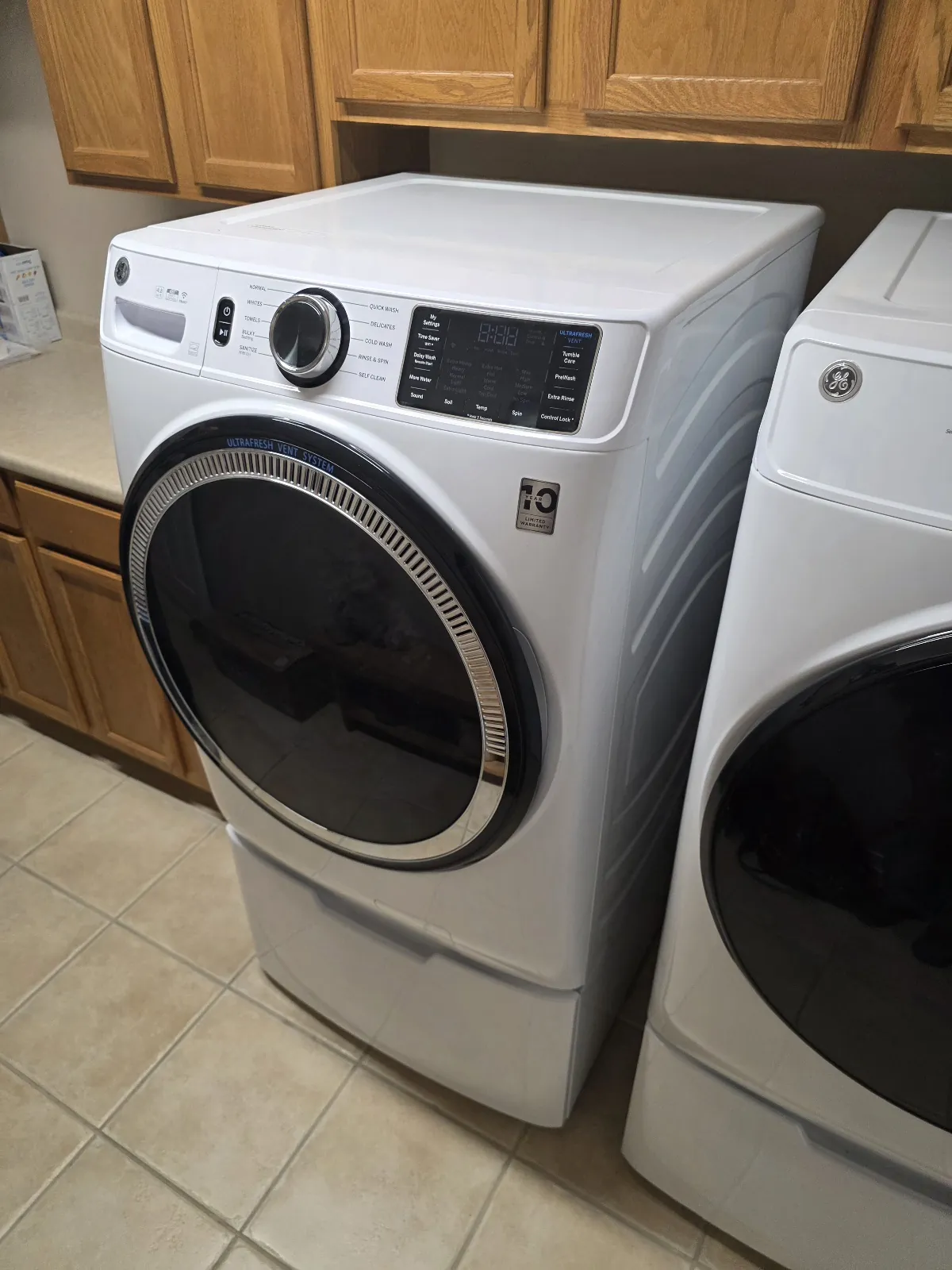
Many modern washers have a control lock to prevent changes during a cycle. When it is active, the controls may appear to have failed even though the washer has power. Look for a lock symbol or the words “Control Lock.” Whirlpool’s guidance says its control lock is released by holding the button identified for that feature, but the right button and hold time are model-specific. Use the manual if the label is unclear.
An error code is also useful information. Write down the exact letters or numbers, take a photo if it is easy, and check the model’s official support page or manual. Do not clear a recurring code over and over just to get the washer to run. A code that returns, a code paired with a leak, or a code alongside a hot smell is the washer telling you to stop and get help.
5. Confirm that water is available when the cycle will not fill
If the washer turns on and locks but never begins filling, make sure the household water valves serving the washer are fully open and the visible inlet hoses are not sharply kinked. This is a visual check only. Do not disconnect hoses or remove inlet screens unless your exact owner’s manual directs you and you are comfortable safely shutting off the water first.
GE’s guidance for a top-load washer that will not fill recommends checking that the hot and cold valves are open and that power is supplied before considering service. It also notes that low water pressure or clogged inlet screens can be involved on some models. A washer that fills slowly, stops, or shows a code can have several causes, so avoid taking it apart based on a generic video. If you are also dealing with standing water from an earlier cycle, our washer not draining guide covers safe next observations.
6. Use a reset only when the manual supports it
Some machines can recover from a minor interruption after power is switched off briefly, but a reset is not a repair. Find the model-specific instruction in the owner’s manual. If the manual does not call for a reset, do not invent one by unplugging and reconnecting the washer repeatedly.
If you use an approved reset, do it once after checking the plug, breaker, door, and controls. Then select a normal cycle and watch what changes. If the washer starts once but fails again on the next load, that pattern is important. Note the cycle, any code, and whether the door locked or water entered. For a machine that starts but leaves clothes soaking wet or will not finish spin, the related washer not spinning guide can help you separate the symptom before you book.
When it is time to stop and book repair
It is reasonable to check the visible power connection, close the door properly, review the controls, and confirm water valves are open. It is not reasonable to keep restarting a washer that repeatedly clicks, trips a breaker, displays the same error, or remains unresponsive after those checks. Internal door locks, control boards, wiring, motors, and water valves need proper diagnosis, especially around water and electricity.
When you book, share what you saw rather than trying to name the failed part. Mention whether the display is dark or lit, whether the door locks, the exact error code, whether the breaker tripped, and whether the washer was recently moved or installed. People 1st can help with washer repair, and the service-area page makes it easy to check nearby coverage. If a new appliance has never started correctly, the appliance installation service may be the better fit.
A quick, safe recap
- Stop using the washer for burning smells, smoke, damaged cords, water near electricity, or a repeatedly tripping breaker.
- Decide whether the washer has no power or has power but will not begin.
- Check the accessible plug, household breaker, closed door or lid, chosen cycle, and control lock.
- When it turns on but will not fill, look only for open water valves and visibly kinked hoses.
- Use a model-specific reset once, if the owner’s manual supports it.
- Book service when the problem persists, a code returns, or anything electrical looks unsafe.
Washer won’t start?
Tell us what the display, door, and cycle are doing, and choose a convenient time for a repair visit.
Frequently asked questions
Why does my washing machine have power but will not start?+
A washer can light up without starting when the door or lid is not fully latched, a control lock is on, the selected cycle needs a longer press of Start, the water supply is unavailable, or an internal part needs diagnosis. Check only the simple, visible items first. If the washer still will not begin with the door closed and a normal cycle selected, arrange service rather than forcing repeated starts.
Can I reset a washer that will not start?+
Some models can recover after their power is turned off briefly, but the exact reset process depends on the model. Use the owner’s manual first. If you try a reset, do it once after checking the plug and breaker. A washer that keeps losing power, trips a breaker, smells hot, or shows the same error again needs professional attention.
Why will my washer not start after I close the door?+
Front-load washers need the door to close and lock, while many top-load washers need the lid to register as closed. Laundry caught in the seal, a very full drum, or a damaged latch can keep that from happening. Remove any obvious item caught at the opening only after the washer has stopped, then close the door normally. Do not force the door or lid.
When should I call for washer repair?+
Call for repair when the washer stays unresponsive after basic power, door, and control checks, when it clicks but does not begin, when an unfamiliar code returns, or when it trips the breaker. Stop using it immediately for smoke, a burning smell, heat at the plug, a damaged cord, water near electricity, or a repeatedly tripping breaker.